Click here to buy Amazon movie bestsellers
Showing posts with label Mafia. Show all posts

Monday, July 21, 2014

Avenging Angelo (released in 2002) - Starring Sylvester Stallone, Madeleine Stowe, Anthony Quinn, Raoul Bova, Harry Van Gorkum

The charming Angelo Allieghieri (Anthony Quinn) and dapper aide Frankie Delano (Sylvester Stallone) are like father and son, associates in ‘watching’- Delano watches over Angelo’s daughter Jennifer Barrett (Madeleine Stowe), who is trapped in a no good marriage, her young son sent away to military school. In his warm, raspy voice Angelo explains to Frankie that he has only Jennifer in his life - this upsets Delano, who is somewhat fed up of being the invisible presence in the lives of both Angelo and Jennifer. The patriarch films his memoirs for his daughter, all the while Delano feels a little neglected in this scenario. Meanwhile, Jennifer is quite hysterical without her son, fraught with the worst thoughts as she feels lost without her only child.
One day, as Allieghieri and Delano chat over a meal, unbeknownst to the two, parked in a car few meters from where they sat - are hired assassins, waiting for them to finish their meal, and then kill the old man - as Delano steps out to sort out a parking ticket issue, in walks hit man Bruno (Billy Gardell) with a loaded gun, emptying the barrel in the old man - Frankie is also hurt in the exchange of fire, he watches helplessly as the man he loved like a father - dies like an unknown, no good derelict, in the corner of a small restaurant.


Meanwhile, Jennifer’s husband Kip (Harry Von Gorkum) is having an affair - Jennifer walks in on him and his lover, shooting randomly, under the influence of mood enhancing drugs. She throws her husband out, rearranging things to kill time. A knock at the door and there’s Frankie Delano - bleeding, asking her if he can come in. She recalls that he used to deliver groceries to Angelo, when she stayed with her parents (she was raised by adoptive parents, unaware that her real father was Angelo). She always thought that Angelo was just a nice old man. After he gets drunk to numb the pain and stitches himself up, he asks her to play a CD - which Angelo filmed for her. On screen, Angelo is telling her she isn’t who she thinks she is; that there were many big names in the mob who wanted to get him - Sammy Carboni, Lucio Malatesta - they disliked each other as well!
So Lucio gifts Sammy a golf set - one which is unique, so that the hit man can recognize who he is; incidentally, the hit man is a traitor from Angelo’s camp. Voila - Carboni hit, Angelo blamed. Two birds with one stone. This is why the blameless old guy was bumped off by Sammy’s son.  Not able to deal with the changes in her life, Jennifer isn’t going to readily accept that her father was a mafia man. Frankie still watches over her from the sidelines, even as she has a fling with an Italian writer; he has vowed to protect her at all costs. Delano’s suspicions about the man she’s having an affair with, the attempt on her life by the mafia - all draw the two closer together as they take on the crime world to salvage the world they have left.
Avenging Angelo was Anthony Quinn’s last film , he died shortly after. The critics weren’t kind to Stallone this time around either, and lashed out at the film’s jaded theme; but like always Sly was having the last laugh as audiences appreciated his cool Italian avatar - very Stallone!
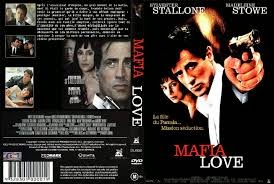
Avenging Angelo (released in 2002) - Starring Sylvester Stallone, Madeleine Stowe, Anthony Quinn, Raoul Bova, Harry Van Gorkum

Wednesday, July 16, 2014

Get Carter (released in 2000) - Starring Sylvester Stallone, Miranda Richardson, Rachael Leigh Cook, Alan Cumming, Mickey Rourke, Michael Caine

Get Carter is a 2000 film directed by Stephen Kay; it is a remake of the 1971 film by the same name, starring Michael Caine. Both films drew inspiration from the book Jack’s Return Home by the British author Ted Lewis. Michael Caine is a part of this film as well. The 2000 version stars Sylvester Stallone in the main lead as a mob enforcer named Jack Carter who returns to his hometown when he gets the sad news of his brother’s death in an accident. At the funeral he can feel that his presence is not welcome, as Gloria and Doreen Carter - his sister in law and niece, tell him in no uncertain terms that Ritchie would’ve appreciated his being around when he was alive, to them Jack is just ‘a picture on the piano’. He also bumps into a stranger, a lady who does not disclose her identity to him.
His years in the mob have given him ample of experience and he has a hunch that Ritchie’s ‘accident’ was anything but. Doreen confides to Jack that although the authorities claim that her father died in an accident caused by his drinking - she says he never drank, at least he wouldn’t get dead drunk and drive around town in a storm! On the other hand, Jack’s boss Les Fletcher (the voice of Tom Sizemore) wants him back in Vegas; he is upset that Carter is missing from ‘work’. Con McCarty (John C. McGinley) tells Carter that things are getting difficult as the news of Jack’s affair with the boss’s wife Audrey (Gretchen Mol) are making the social circuit.
In a bid to get to the mystery surrounding Richard’s death, Jack stops by Cliff Brumby’s (Michael Caine) office. Cliff is a loan shark and owner of the club where Ritchie worked for five years as manager until his untimely death. Cliff asks Jack if he knew about Ritchie and Geraldine’s affair – she is the woman from the funeral. Carter tails her to her workplace, where she is with Cyrus Paice (Mickey Rourke) - who is an acquaintance from the past. Carter is suspicious of Paice, for whom Geraldine works.


As he tails Paice, he is led to Jeremy Kinnear (Alan Cumming), a well established business man who owns a computer company, which is worth ‘gazillions’. Jeremy leads a dual existence, playing to the gallery of stockholders with his pin stripes, and having some risqué fun in his free time - thanks to Cyrus Paice and his escort service. After his interaction with Jack, Jeremy is freaking out with someone over the phone, telling the person he wants nothing to do with the big brother and wants him gone.
As Jack delves deeper into the case, he finds out that Cyrus is infact running well oiled machinery that breeds pornography - his niece Doreen is one of the girls implicated and sexually abused by Paice, even Geraldine is roped in to track girls, who are later drugged and raped, and filmed. Given that Richard and Geraldine were lovers, out of loyalty and friendship, she hands over the disc with the proof of what has been happening - it was when Ritchie decided to go to the police that he was killed.
Now Carter sets out to take revenge for his brother's death, and there are a few killings that happen as a result. Although the film received no critical appreciation and did not make too much money either, yet it was welcomed by audiences who lapped up Stallone’s sharply dressed, mafia image. The soundtrack and visuals added to the thrill of the viewing experience and feel of the film.

Get Carter (released in 2000) - Starring Sylvester Stallone, Miranda Richardson, Rachael Leigh Cook, Alan Cumming, Mickey Rourke, Michael Caine

Thursday, February 10, 2011

My Blue Heaven (released in 1990) - A comedy starring Steve Martin, Rick Moranis, and Joan Cusack

This Steve Martin movie is light hearted and fun. It is a romantic comedy where the romance is of less importance because the chemistry between the male and female co-stars pale in front of the chemistry between the male ones. Directed by Herbert Ross and scripted by Nora Ephron this movie is based on the life of Henry Hill.
Steve Martin plays Vinnie Antonelli an Ex-Mafia don who is going to squeal on his murderous ex-buddies. So he joins the witness protection program and moves to a suburb in San-Diego to keep his detractors away. Vinnie is protected by Barney Coopersmith a stiff uptight policeman whose attention to detail gets on everybody's nerves. Vinnie's wife leaves him earlier on as she is not charmed by the domestic life of the suburbs. Same happens for Coopersmith whose wife finds his tiny habits annoying, it seems that he is so methodic that he gets equal amounts of butter on to the two halves of his waffle.
Vinnie soon settles in to the witness protection program, but you cannot keep the crime out of a mobster too long. He starts petty thieving which goes on to bigger times and frenetic night clubbing. Poor Barney Coppersmith is simply aghast and tries hard to reason with him.


Vinnie even meets up with his old pals to start a new syndicate. Hannah Stubs played by Joan Cusack is the district Attorney who tries to prosecute Vinnie for his crimes, but her actions come to a cropper because he is part of the witness protection program. At first Barney and Hannah hate each other but are thrown together a lot. So the ice melts and to Vinnie's delight, they start liking each other. Vinnie takes Barney under his wing and helps him to dress better, dance better and woo Hannah.
Meanwhile Vinnie's old pals in crime try their best to prevent him from testifying. So Vinnie does all the wonder work for Barney and together they outwit the murderous gangs of Manhattan. This laugh riot is one of the funniest movies of all times. It was a critics delight but did not exactly set the box office on fire. Just as good wine, it slowly acquired a fan following and is considered as one of the cult comic capers of the century. The story may not be an Oscar winner but the script is great, suitably interlaced with one liners which evokes laughter. The best part of it is the bonding between Vinnie and Barney and the chemistry between the two actors just raises the film to a new level. It was so that Steve Martin was to play the role of Barney and Schwarzenegger that of Vinnie. But Schwarzenegger opted out and the role was taken up by Steve Martin. Rick Moranis was brought in for Barney. No complaints there for they rock the show.
Not the least, a great hurrah for the songs in the movie. The great numbers like “New York, new york”, “Take me out to a ball game”, “the boy from New york city” and “My blue heaven” are absolute delights. You can watch this movie anytime, in any mood as it is bound to evoke the loud guffaws. Only trouble may be your neighbor's objection to your loud laughter.

My Blue Heaven (released in 1990) - A comedy starring Steve Martin, Rick Moranis, and Joan Cusack

Sunday, March 21, 2010

Gangs of New York (2002) - A movie by Martin Scorsese, and a big commercial success

With Gangs of New York (released in 2002), Martin Scorsese was back to where he makes his mark, the gritty streets of New York, with lots of hard violence, mafia and gangs, rock music based soundtrack, and people with an inclination for violence. However, with the movie, Scorsese starred a different set of characters, with the starring roles being taken up by Daniel Day-Lewis, Leonardo DiCaprio and Cameron Diaz. The movie was set at the time of the American Civil War of the 1960's, and was based on a pretty old book by Herbert Asbury, with the same name "The Gangs of New York".
This was another movie that Scorsese had been wanting to make for a long time, but kept on getting put off for various reasons (over a period of greater than 2 decades); even when the movie was finally made in 2001, the release was delayed for a period of around an year while Scorsese and the producer Harvey Weinstein negotiated on the final cuts in the movie, and the actual length of the movie. The movie was finally released to a majority of critical acclaim, although many critics found the movie not as good as some of his better movies. The movie, made at a budget just under $100 million, went on to make approximately $200 million worldwide.


The movie is about a conflict between 2 warring gangs, led by their leaders. William "Bill the Butcher" Cutting (Daniel Day-Lewis) is a White Protestant Anglo-Saxon and leads the gangs called 'The Natives', since they are already residing there; further, Bill has a hatred of immigrants and their attempts to muscle into the territory where he is the primary gang leader. He comes into conflict with a gang comprised of recent immigrants, with the gang called "Dead Rabbits," led by Priest Vallon (Liam Neeson). He has a young son called Amsterdam (who will later become Leonardo DiCaprio when he grows up). These 2 gangs have a bloody fight in which Bill kills Vallon, witnessed by Amsterdam. Amsterdam finds the knife with which his father is killed and buries it, and then is taken to an orphanage. This entire situation is set in the year 1946.
Change to 16 years later, when Amsterdam is now an adult, the Civil War between the North and the South is in full swing, and the draft is in commission. Amsterdam finds that his father's old gang members are mostly now part of Bill's gang. Amsterdam is introduced to Bill by an old friend, Johnny (without telling Bill who Amsterdam actually is). Amsterdam also meets a pickpocket called Jenny Everdeane (Cameron Diaz), and is attracted to her (although his friend Johnny is also attracted to her); Bill starts trusting Amsterdam more and Amsterdam keeps on gaining some amount of influence, and also saves Bill once in an assassination attempt.
Bill trusts Amsterdam enough to talk about Priest Vallon with him, including the fact that he respected Vallon, and it was that incident that gave him strength and character to fight all his enemies. The rest of the movie is about the final fight between Bill and Amsterdam, once Bill has learnt who Amsterdam actually is, while the Union Soldiers are quelling riots that have broken out in the city over the draft laws.

Gangs of New York (2002) - A movie by Martin Scorsese, and a big commercial success

Monday, March 15, 2010

Casino (1995) - Directed by Martin Scorsese and starring Robert De Niro, Joe Pesci, Sharon Stone

Casino was a movie released in 1995, and ranked to be one of the best movies made by Martin Scorsese. The movie was somewhat of a departure from the traditional New York setting of many of his other movies, although the use of mafia, violence, and rough language was still common (in fact, the movie was somewhat controversial because of the use of the word 'fuck' for almost 400 uses in one movie). The movie was based on a book by Nicholas Pileggi, with the screenplay for the movie written by Nicholas Pileggi and Martin Scorsese. The movie was based on a some real incidents, including the fight between a mob guy named Frank "Lefty" Rosenthal (a real life person based from the 1970's and early 80's who used to oversee multiple casinos for the mob) and his wife Geri McGee, a former topless dancer).
This concept was the idea of Nicholas Pileggi, who approached Martin Scorsese for the movie, and Scorsese was an eager supported of this thought, and decided to make a movie. When the movie was released, Martin Scorsese also have a tremendous reception, and this movie continued the trend, with the movie having got an overall positive acclaim. However, the movie did not do anything great at the Academy Awards, with a single nomination for Sharon Stone.


Robert De Niro stars as Sam "Ace" Rothstein, called in by the mob to oversee the operations of the Tangiers (non-existent in real life) casino in Las Vegas. In addition, Nicky Santoro (played by Joe Pesci) is a mob enforcer sent in to ensure that money keeps on coming to the mob, and that the mob's investments in the casinos are kept safe. Sharon Stone plays the role of Ginger, a devious lady who is also the wife of Ace (the skillful portrayal of a woman on the edge did get her a Golden Globe award for Best Actress).
The movie starts with an explosion in the car of Sam 'Ace', but he survives, and then the movie starts in flashback, moving back to the time in 1973 when Ace is brought in to run the Casino Tangiers. Ace is good at his job, and in a short period of time, he doubles the profits of the casino; however, the mob takes its cut before reporting to the tax authorities. Nicky is sent in to ensure that Sam has protection as he does his work. However, not everything works as intended; since Nicky works out to be nuisance with his attitude, and is banned from many casinos. Sam meets Ginger McKenna, and marries her after they have a baby girl.
Their is a difference that starts growing between Sam and Nick, and he also draws public attention when he gets into a dispute with the County Commissioner, and getting public attention is something that is bad for the mob. Things reach a boil pretty quickly after that, when Sam gets into a dispute with Ginger, and soon after, also begins a sexual affair with Nicky (something very severely frowned upon in the mob). This dispute between Sam and Nicky gets the FBI involved when some loose comments are overhead, and things quickly reach a stage where the entire business starts to unravel. And then the mob bosses, who are now in trouble themselves, have to decide whom to silence to ensure their safety. What happens to Sam, Ginger and Nicky ?

Casino (1995) - Directed by Martin Scorsese and starring Robert De Niro, Joe Pesci, Sharon Stone

Friday, February 26, 2010

Mean Streets (1973) - Directed by Martin Scorsese, and starring Harvey Keitel, Robert De Niro and David Proval

In the early 1970's, young director Martin Scorsese was still struggling to make his mark. At that time, just after the release of 'Boxcar Bertha', Scorsese had started displaying his talent, but it was the release of 'Mean Streets' in 1973 that moved the director much ahead in his career as a director. The movie, starring Harvey Keitel, Robert De Niro and David Proval, was made with the encouragement of directors such as John Cassavetes, Samuel Fuller, and Jean-Luc Godard, and was released by Warner Brothers. Based on his experience with Boxcar Bertha, Scorsese had learned how to make movies at low cost, and Mean Streets was also a low budget movie, costing only around $500,000. This was one of the first movies that Scorsese made after being told to make movies in the style he wanted rather than make movies for somebody else, and the movie established his signature style (macho men, lots of violence, emotions based on Catholic notions of guilt, and a soundtrack based on rock). The movie is set in a gritty location in New York, again like many of his other movies. Scorsese was originally planning to make the movie called as 'Season of the Witch', but he later changed this to 'Mean Streets', based on a line from author Raymond Chandler's novel 'The Simple Art of Murder'.


The movie was very close to Martin Scorsese, since this was based on events that he used to see everyday in the areas of New York in which he lived. The end result was a movie that earned critical acclaim, with movie critic Pauline Kael being very enthusiastic in support. The movie also earned De Niro an award (not an Oscar though) as Best Supporting Actor for his role as the destructive guy who increasingly heads towards destruction inspite of the efforts his friend Charlie. Charlie in turns plays the role of an Italian-American who is a wannabe mafia member, and who acts as a debt collector for his uncle Giovanni. He also has an ongoing affair with Teresa, who is Johnny Boy's (De Niro) cousin.
The meat of the movie is about the conflict that Charlie faces, with his devout Catholic faith (with its concepts of good vs. bad, redemption, and guilt) versus his ambitions of making it big in the mafia (in direct conflict to his Catholic faith). How does Charlie resolve this dilemma ?

Mean Streets (1973) - Directed by Martin Scorsese, and starring Harvey Keitel, Robert De Niro and David Proval

Wednesday, September 9, 2009

The Untouchables starring Kevin Costner (1987)

The story of Al Capone, and the mafia as such, is a popular story with dramatists. There have been numerous books and movies that deal with the story of gangsters, and many of them have been exceedingly popular. The story of Al Capone, his rise, the terror he inflicted on society, the way he fought his way to the top, his exploitation of Prohibition to smuggle alcohol, all these were part of his mystique. What was equally remembered about him was the St. Valentine's Day massacre that he committed on his rivals, first disarming 7 of them using his men in police uniform, and then using Tommy guns on them. Equally remembered about him were the efforts of the Government to bring him down (even when Chicago and neighboring towns were controlled by his men, with the police and officials on his payroll), and how we was brought down on a charge of tax evasion rather than for the numerous crimes he committed. The jail term on him was a stiff one, and effectively broke his empire.


Brian De Palma made 4 gangster movies, these 4 being Scarface, Wise guys, Carlito's way, and The Untouchables. The other 3 movies were all about the gangsters, while The Untouchables takes the action from the perspective of lawkeepers, the persons out on a mission to capture the gangster, even when they have to follow rules and laws, while the Gangster can use any kind of force, can subvert the authorities, and threaten whoever they want. The Untouchables is the real life story of the people who managed to break the power of a mob lord against all these factors, and the methods they used (who would have believed that you could send a gangster to prison for tax evasion rather than for the various crimes!).
The movie is based on a subject that has been created earlier as well, and is essentially based on the autobiography of Eliot Ness. Eliot Ness was the agent who was sent to bring Al Capone to justice, and to free Chicago from his destructive and criminal ways. The movie starred Kevin Costner, Sean Connery, Robert De Niro and Andy Garcia. Sean Connery won a best supporting actor Oscar for his portrayal of the Irish American cop Jim Malone. The movie does not fully present this as a good vs. evil fight, also portraying the parts where Capone showed support for the poor by running soup kitchens and other similar efforts, as also the role where Ness actually throws a hood off the roof of a building rather than bring him in for justice.
The movie is well choreographed, with the scenes bringing out the drama. The scene right at the end, where the juries are switched is gripping, especially if you don't know the story. An eminently watchable movie.


http://en.wikipedia.org/wiki/The_Untouchables_(1987_film)

Once Upon a Time in America (1984) - Directed by Sergei Leone

Sergei Leone became famous for the spaghetti westerns that he made, and for which he was the prime creator. At the same time, some of these westerns were very acclaimed movies, ranked among the great movies. One of the great westerns he made was 'Once Upon a time in the West' made in 1968, and it was almost from that time that he read a book by a mafia insider (known by a pseudonym called Harry Grey) called 'The Hoods'. He was inspired by this book, and wanted to make a movie out of this book, but because the movie rights of the book was held by another producer, it took him a couple of decades to finally make this movie. Over this long time, a number of different actors were thought of for the key roles of Max, Noodles, and Deborah (with the number of people being thought reading like a roll call of the actors of the movie industry), in the end, the main adult roles of the characters were played by Robert De Niro, James Woods, and Elizabeth McGovern (adult female lead), Jennifer Connelly (younger female lead).


The movie itself came in for controversy because of its long length. After the shooting, the director and editor found themselves with more than 8 hours of footage. Leone, not wanting to cut down from the many scenes, initially wanted to release the movie as 2 three hour long movie parts, but had to back down after the producers insisted. He finally cut down the movie to an almost 4 hour long, 229 minute movie (which is also fairly long by most standards). This 229 minute long movie was very well received by critics; but the US release had a different story. Against Leone's wishes, the movie was cut down further, by cutting another 90 minutes from the movie, resulting in a movie that was not welcomed by the critics. However, when they saw the original 229 minute cut, they changed their opinion, and that is the version that is the popular one now, with most people pretending that the shorter version does not exist.
The movie takes 3 different timelines, with different ages for the main characters. In the early part of the movie, in the early 1910's, with the characters in their early years, struggling to survive in the ghettoised neighborhood. Noodles and Max meet up, and become the local leaders of a small gang, until they have a fight with another gang, at which Noodles kills the the other gang leader and attacks a police officer. He is now jailed for 12 years.
After Max comes out of jail in 1932, he re-joins Noodles and other gang members, and they slowly start getting involved in Mafia matters, taking part in jobs, getting involved in strikes and being on the side of the union leaders. However, Noodles is hesitant at the pace proposed by Max and tries to get them to slow down. He calls the police when the gang is at another job in order to get them to slow down, but this results in an encounter in which his gang friends, including Max, are killed. Noodles goes to get the gang money, but finds that missing. He eventually changes his identity to escape the hunt by the Syndicate for the traitor, and lives in Buffalo for decades.
In the fast forward to the future, in 1968, Noodles returns to New York City, and finds that there are some surprised. He discovers that Max had actually faked his death with help from the Syndicate, and then deceived his friends, and had stolen the money. He now wants Noodles to assassinate him, but when Noodle refuses, Max commits suicide by throwing himself into a garbage truck (an iconic scene).
However, there is a flashback, where the Noodles of 1933, in an opium den, on the run from the Syndicate is shown; he is an opium induced trance, and the supposition is that the entire future events of 1968 are actually a dream, and this is something that Sergei Leone has confirmed in an interview.

Once Upon a Time in America (1984) - Directed by Sergei Leone, and starring Robert De Niro and James Woods

Friday, May 29, 2009

West Side Story (1961)

There are many movies that have been adapted from screenplays or from books, and West Side Story is one of the most successful of the lot. The movie was adapted from a running screenplay of the same name, which was adapted from a very famous piece of work by Shakespeare called 'Romeo and Juliet'. The movie credits the direction by 2 people - Robert Wise and Jerome Robbins. Jerome Robbins was the first director, and he was also the director of the stage version, as well as being responsible for planning and directing all music and dance sequences in the film, as well as all the fight scenes. However, when around 60% of the movie had been shot, the producer of the movie (Robert Wise) felt that the costs had not been in check, and Robbins was fired. In the end, when the movie earned 10 Oscars (out of a total of 11 Academy Awards nominations), Robbins got a special award.

Poster for West Side Story, movie released in 1961 that won 10 Oscars

The concept of 'Romeo and Juliet' is an extremely old concept, valid in different cultures and across geographies. The theory that a girl and boy from 2 rival clans meet, fall in love, and fall victim to the enmity between their clans (and getting killed due to this rivalry) is something that finds mention in a lot of different cultures. This movie is also based on the same concept, with the clans being modified to be 2 different gangs set in New York in the 1950's. These are 2 rival gangs called the American Jets and the Puerto Rican Sharks (and these are composed of members from different racial backgrounds), fighting for supremacy over the New York neighborhoods in which they operate.
The romantic duo are Tony (Richard Beymer), who is a former member of the Jets gang (and also its co-founder), and Maria (Natalie Wood), who is the sister of Bernardo (George Chakiris), the head of the rival Puerto Rican immigrants gang, the Sharks. These 2 meet at a dance, to which Tony has gone to convey a message about a challenger between the 2 gangs, something that would decide the rivalry once and for all.
The movie is a musical, so there are several song and dances about the tension in the gangs as they proceed to a final rumble (the challenge) between them, along with the excitement in the life of Tony and Maria as their love increases. The story climaxes when Maria requests Tony to stop the rumble, and Tony is subject to ridicule from the gang members when he tries to stop them. His attempts are met with scorn, and the Jets head Riff cannot stand to see this ridicule of his close friend and starts fighting with Bernardo. In this tussle, Bernardo kills Riff, and Tony kills Bernardo in revenge. At this point, the police arrive and the gang members disperse.
Maria is informed by another gang member Chino (Jose DeVega) about the fight and about Tony killing her brother. When Tony arrives, Maria is very angry, but Tony manages to convince her by detailing what happened at the fight, and by offering to surrender to the police. However, the story happens in tragedy when Tony and Maria are about to meet, Chino comes in and shoots Tony. It is in this tragedy that the gangs unite, when member of both gangs carry Tony's body.

Academy awards:

Wins:

Academy Award for Best Picture – Robert Wise, producer
Academy Award for Directing – Jerome Robbins and Robert Wise
Academy Award for Best Supporting Actor – George Chakiris
Academy Award for Best Supporting Actress – Rita Moreno
Academy Award for Best Art Direction (Set Decoration, Color) – Victor A. Gangelin and Boris Leven
Academy Award for Best Cinematography (Color) – Daniel L. Fapp
Academy Award for Costume Design (Color) – Irene Sharaff
Academy Award for Film Editing – Thomas Stanford
Academy Award for Original Music Score of a Musical Picture – Saul Chaplin, Johnny Green, Irwin Kostal, and Sid Ramin
Academy Award for Sound – Fred Hynes (Todd-AO SSD), and Gordon Sawyer (Samuel Goldwyn SSD)

Nominations

Best Writing, Screenplay Based on Material from Another Medium – Ernest Lehman

Friday, October 10, 2008

Raging Bull (1980) - a great Robert De Niro movie

The movie stars Robert De Niro, Joe Pesci, and Cathy Moriarty. The movie was based on a biographical novel written by Jake LaMotta (published in 1970), with the biography based on his life - primarily about his life from being a young teenager, reform, his life as a boxer (and his fights with the mafia about trying to get the main title), his jealousy over his wife Vickie; it is also about his attitude, and also about the strong relationship with his brother Jeoy. The story was adapted by Paul Schrader and Mardik Martin for the movie, that was eventually directed by Martin Scorsese and released in 1980.
The movie is a great black and white portrayal of the life of the boxer, Jake LaMotta. The movie was so popular with critics (after an initial mixed reception) due to its brutal portrayal of Jake's tormented life, going off into violent temper tantrum, suspecting his young wife Vicki, even with his own brother. His temper and attitude also moves his away from his own family. Robert De Niro is able to portray this incredibly, including showing the puzzlement he faces when he is not able to control his own temper tantrums, nor understand why they occur; the impact of these tantrums are very destructive for him.

Raging Bull starring Robert De Niro and released in 1980

The movie got such critical acclaim that it was nominated for 8 Oscars, and won 2 Academy Awards. The event was overshadowed by the attempted assassination of President Ronald Reagen by John Hinckley Jnr, attempting to do a 'Taxi Driver' stunt of trying to impress Jodie Foster. Over a period of time, the movie got much more support from critics, being rated among the top movies of all time; definitely the best movie of 1980, and among Martin Scorcese's best movies. The Oscars for which the movie was nominated were Picture, Director, Actor, Actress, Supporting Actor, Cinematography, Sound and Editing; the movie finally picked up the Oscar for Best Actor (DeNiro) and Best Editing (Schoonmaker).
The movie starts in flashback, where a much heftier Jake LaMotta (Robert DeNiro put on 50 kilos for this part of the role, after training to bring himself to a boxer's peak physical condition for the early part of the role) is practicing his comedian's act in 1964. And then the movie moves onto the meatier part of the role, to 1941 where Jake is into his boxing career, aided by his brother Joey who is a sparring partner as well as the organizer of his fights. The movies takes us through the fights he has, the fights that his brother has on his behalf, the wooing of his wife as a young adult upto the point where he becomes paranoid and accuses her of cheating on him. You really need to see the movie to feel the power of the movie.

Saturday, August 2, 2008

Some Like It Hot (1959)

Some Like It Hot, a movie released in 1959 and starring Marilyn Monroe, has been acknowledged to be one of the top 10 movie comedies of all time, with the American Film Institute calling the movie as the greatest American comedy film of all time. The movie stars Tony Curtis and Jack Lemmon as 2 men on the run from gangsters (having witnessed a massacre), and using the guise of women to try and get away from the gangsters. In between, they meet Marilyn and fall for her, while a very rich man falls for one of them (in his disguise as a woman).
The movie was directed by Billy Wilder, and was adapted from a story written by Robert Thoeren and Michael Logan. The same story with some differences had already been used in a German movie called 'Fanfaren der Liebe' (made 8 years ago in 1951).

Some Like It Hot (1959)

The movie was condemned by religious groups (with the Catholic Legion of Decency criticizing the movie). For a number of decades, Hollywood had been under a Production Code (that covered the morals of movies). It was on its way out, and this movie was one of the movies that contributed to its passing, released after not having received an MPAA logo. The movie was received well, and nominated for 6 Oscars. It won one Award, Best Costume Design, Black-and-White (Orry-Kelly).
The movie is about these 2 struggling musicians, who are trying to escape Chicago after seeing a mob maasacre. However, it is difficult to find a job, and they find that the only out of town job they can get is 2 positions in a All Girls Band that is going to Florida. They join in, dressing as woman (and this is part of the reason why the movie was made as a Black and White movie, since the makeup to make them look like woman was not letting the movie look good in color); and calling themselves Josephine and Geraldine (later changed to Daphne). Soon, they also find themselves head-over-heels for the vocalist and ukulele player, "Sugar Kane" (Marilyn Monroe). It is a bit difficult to express your emotions openly when you are dressing as a woman, so that part is a struggle for them.
Joe becomes enterprising, taking on the role of a millionaire and romancing Sugar in that role; it is Jerry who gets into more trouble. An actual millionaire, Osgood Fielding III, falls for his female disguise, and Jerry plays along in the hope of making some money from this transaction. And then the finale, where the gangsters arrive at the hotel for a conference, and spot these 2. They run from the mobsters, finally reaching the yacht of the millionaire, where the drama continues to happen. Sugar reveals that she has fallen for Joe, and to Jerry's horror, Osgood keeps pursuing him, right to the end when Jerry reveals that he is a man, a very famous line is spoken by Osgood, "Well, nobody's perfect."

Saturday, February 2, 2008

On the Waterfront (1954)

On the Waterfront is a movie that is more than 50 years old now, but it can still make an impact. The movie was an incredible career booster for Marlon Brando, giving him a massive reputation in the Oscar-winning role of a man who was just passing through life as a 'bum', being the lackey of a mob boss in the union, until a couple of deaths and the inspiring words of a priest and the sister of one of the ones killed caused his conscience to slowly come back to life and get him to do the right thing. The movie portrays an end full of optimism, with the breaking of the control of the mob boss who controlled the union of longshoremen. The whole situation was that of exploitation of the dock workers, and corruption and use of force in order to retain the control of the boss.

Marlon Brando: On the Waterfront (1954)
This movie had a certain amount of history in terms of reasons for it being made. The movie was directed by Elia Kazan; he was controversial because he had reported names of possible communists in the American film industry in 1952 (2 years before the making of this movie) to the House Un-American Activities Commission, and he had been criticized for this action. The release of a movie in which the hero breaks the might of a mighty corrupt and evil authority by 'squealing' / 'telling the truth' before a Government commission investigating the waterfront was seen as an answer to the claims made earlier against Kazan that he was a squealer.
Around the period in which the movie was made, the scene of the waterfront was indeed a place of oppression in which ordinary workers had no dignity, only those got jobs whom the boss of the union decided or were in his favor, and there was a systematic exploitation of these workers. The movie was actually based on a Pulitzer Prize winning series of 24 articles in 1949 in the New York Sun by reporter Malcolm Johnson called 'Crime on the Waterfront'. The article was a harsh expose on the scene on the waterfront, detailing bribery, corruption, payoffs, kickbacks to union officials, theft, murder and a generally oppressive culture.
The movie was seen as such a striking movie with its portrayal of the activities on the waterfront, a great melodrama, and an incredible performance by Marlon Brando that it was nominated for a total of 12 nominations and won 8 nominations, putting it at a very pedestral in terms of awards won:
* Best Actor - Marlon Brando
* Best Picture - Sam Spiegel, producer
* Best Supporting Actress - Eva Marie Saint
* Best Art Direction - Set Decoration, Black-and-White - Richard Day
* Best Cinematography, Black-and-White - Boris Kaufman
* Directing - Elia Kazan
* Film Editing - Gene Milford
* Writing, Story and Screenplay - Budd Schulberg
Nominations that did not win
* Best Supporting Actor - Lee J. Cobb
* Best Supporting Actor - Karl Malden
* Best Supporting Actor - Rod Steiger
* Music Score of a Dramatic or Comedy Picture - Leonard Bernstein

The movie is about a former boxer Terry Malloy who is somewhat slow-witted. He manages to survive by being the odd job man for the union boss Johnny Friendly. His brother Charles Malloy, is the lawyer for Johnny Friendly. He is just content doing jobs given to him by the union boss and for his pleasure, rears pigeons. The chief property of the union is that no information is to be given to outsiders about anything, a policy of D n D (Deaf and Dumb) - similar to the mafia code of omerta. But, another young dock worker is about to report whatever he knows to an investigating committee, and this trouble-maker needs to be eliminated. Terry is used to call him, and then this young worker Joey is then thrown off a roof by 2 of the boss's henchmen. This horrified Terry, since he is the conduit through which Joey was called to his death.
Slowly things start changing due to the impact of a local priest who is trying to rouse the workers from their lethargy; and more so due to a slowly forming attraction between Terry and Edie (sister of the dead Joey). Both Friendly and Charles see this change starting to happen in Terry, but are unable to stop him. Over a period of time, Terry starts to feel his conscience starts to awaken and he starts to shrug off his sluggish nature. He in fact almost breaks with his brother by blaming him for the way his life had turned out (his brother had asked him to throw a match against another boxer and his life had taken a turn for the worse after that).
Towards the end, his brother is killed by Friendly because of being unable to prevent Terry from giving tetimony, and Terry goes ahead and implicated Friendly in the death of Joey. In a bruising scene after that on the waterfront, Terry fights Friendly and then his henchmen, and gets badly beaten up. However, he has the ultimate triumph when the other workers all line up behind him and throw off the fear of the union boss.

Sunday, December 30, 2007

Goodfellas (1990)

Goodfellas is seen as an iconic movie, taking the role of a mafia man (without getting into the role of a mafia boss as in Gangster) through 30 years of his file, from a childhood yearning to be a man of power and money, to a final stage of obscurity in the Witness Protection Program, a man hidden by the Government to keep him safe from former companions (who have been betrayed). After all, in the mafia, the code of silence, 'omerta' is one of the most powerful weapons and breaking that is liable to lead to expulsion and enmity (and enmity with the mafia means death).
The number of Italian-Americans involved in the mafia is a very small fraction of the US, but the influence on the crime scene, and the level of intrigue in knowing more about their criminal activities has always had a very strong attraction for the US movie market and for audiences (and hence the large number of successful movies detailing various elements of the mafia). Goodfellas is probably one of the best in the league, and has been counted as among the top 100 movies ever made.

Goodfellas (1990)
The movie is based on a true story, about a small-time gangster of Irish-Sicilian origin (and hence not a true Sicilian, and hence never be able to be a 'made' member of the mafia. Unless you were a pure-blood Sicilian, you could never be a full member) called Henry Hill. Eventually Henry reached a situation where he squealed on his friends (or in legal parlance, he helped the police and FBI break up an organized crime gang) and had to be put in the Witness Protection Program for his own safety. This real life story was captured in Pileggi's 1985 non-fictional book Wiseguy: Life in a Mafia Family.
Goodfellas depended on the acting capabilities of a few prime actors:
Robert De Niro playing Jimmy Conway
Joe Pesci playing Tommy DeVito
Ray Liotta playing Henry Hill
Lorraine Bracco playing Karen Hill
Paul Sorvino playing Paul Cicero
And, luckily for the movie, and for us, these actors delivered. To portray a good mafia movie, there has be to a certain inherent level of violence shown both in actual physical violence as well as being able to display a force through acting and dialogues, and it all seems to have come together. Goodfellas garnered 6 Oscar nominations in all (Best Actor in a Supporting Role, Best Actress in a Supporting Role, Best Picture, Best Director, Best Film Editing and Best Adapted Screenplay). It must not have clicked with the voters though, since it was able to get only one Oscar - Best Actor in a Supporting Role for Joe Pesci.
In a Italian-American neighborhood in the 1950's, mafia members had a certain attraction for boys growing up due to the easy money and power they projected, and Henry Hill was one of the boys so impressed. Eventually, he quits school and goes to work for the local mobster Paul Cicero and grows up in this company, learning the ropes of theft. He gets help from Jimmy Conway (Robert DeNiro) and associates with a violent sociopath Tommy DeVito (Joe Pesci). They indulge in stealing cargo from the airport and make a pretty penny out of this racket. Henry also falls for a Jewish girl, Karen who initially is put off by him, but slowly gets intrigued by the mafia and the different life it entails for a member.
They (particularly Tommy) get more vicious, and eventually indulge in the ultimate sin, killing a 'made' mafia member without sanction, and hide the body so as to seemingly escape the responsibility and retribution. One of their activities in Florida (hanging a gambler over the lion cage in Florida zoo) gets them 4 years in the slammer, a period when Henry is left adrift by his friends and he has to start indulging in dealing drugs to stay afloat (and which also starts his downslide). When Henry gets out of jail, he continues to indulge in the profitable business of drugs despite Paul Cicero's express disapproval.
The downfall of these gangsters continue - primarily displayed in 2 separate situations. In the first one, after a major robbery, Jimmy starts killing off his associates because they start flashing their wealth, something that could draw attention. And then Tommy is killed due to his role in the earlier unsanctioned killing of the mafia member, Billy Batts.
The day which changes Henry's life occurs on Sunday, May 11th, 1980, when Henry is involved in many separate things. He has to coordinate a cocaine shipment, meet his mistress, get his brother from the hospital, cook a meal for his family, all the while when he is suffering from lack of sleep and an overdose of drugs; on top of everything, he is under federal surveillance. Eventually, he is arrested by the police; he is bailed out by his wife but the family becomes penniless as she had destroyed the entire cocaine shipment in the process.
Now Henry starts feeling abandoned, and not only abandoned, as being marked for elimination. He decides to turn approver, and break the code of silence. He and his family enter the federal Witness Protection Program, disappearing into anonymity to save their lives, but not before he testifies against Paulie and Jimmy in court.
The movie was a great review hit and earned around $47 million dollars, and also cemented Martin Scorsese's reputation as a great director. Scorsese wanted to depict the film's violence realistically, "cold, unfeeling and horrible, and that was the effect that the film's critics and viewers got to see.

Saturday, September 1, 2007

L.A Confidential: A very slick movie

This movie was made in 1997, and was a very slick movie. The movie was based on a 1990 book of the same name by James Ellroy, and was at one time considered very difficult to base a book on. But, finally the book was converted into a screenplay by Curtis Hanson and Brian Helgeland, and turned into this movie that won 2 Oscars (Best Supporting Acress for Kim Basinger and Best Adapted Screenplay (a vindication of the efforts by Curtis and Brian)). The movie is considered a good effect of a new-generation noir movie, with a great direction by Curtis.
The movie was acclaimed by most critics, although it earned only around $30 million profit in the US (costing 35 mil and making 65 mil), but it must have also been earning a lot more from the DVD market and from the international market. The movie primarily stars 5 characters (Kevin Spacey, Russell Crowe, Guy Pierce as 3 cops in the LAPD; Kim Basigner in an award winning role; and James Cromwell in the pivotal role of Capt Dudley Smith as the Police Captain who wants to build the crime system lorded over by himself.


The movie is set in the 1950's Los Angeles, and for the people who did not know what the city was like at that time, it presented not a very clean picture. There was a lot of cop violence, corruption in the police force, sleaze in Hollywood, a lot of buzz about call girls who were styled to look like top movie actresses, drug addiction, tabloid journalism out to expose corruption and crime so as to sell more (although that does not seem to have changed). The movie focuses on the intersection of all these, and tries to end at a positive end with some of the forces of corruption reduced and the police administration wanting to make a clean sweep of the police force so that it can be a respected force.
The roles of these 3 cops is the most pivotal, since it is they who drive the various scenes and acts of the movie. The youngest and freshest to the Police Force is Detective Lieutenant Edmund Exley (Guy Pearce), the son of a legend from whom much is expected. He is a change from the brutality and corruption in the police force and is basically honest, although he is shown to be manipulative in the end. However, these attributes set him aside from the other policemen, especially when he testifies in a jailhouse brutality trial in which a long-serving member of the police force is implicated and has to retire.
The next is Officer Wendell "Bud" White (Russell Crowe), who is a man who uses force a lot, and is much feared. He has no love lost for Exley, especially when his partner is removed from the police force based on Exley's testimony. However, when his former police partner is killed in the 'Nite Owl' massacre, he becomes much more involved in the case. He does not take kindly to women beaters, and is tender to the victims. He is also being used by the Captain to take down rival mafia leaders.
The third cop is Sergeant Jack Vincennes (Kevin Spacey), a very slick cop, who is in the limelight. He serves as the technical advisor to a crime television show, and also funnels a lot of information to Danny DeVito (who is connected with Hush-Hush magazine), including making arrests almost in front of the camera of the magazine.
The main event of the movie is the massacre of the patrons of an all-night diner, called the Nite Owl massacre. The investigation of this leads to a call-girl racket in which Kim Basinger is involved, and Russell Crowe starts having an affair with her. The others also get involved during investigation, and eventually the trail leads to a small cabin in the middle of nowhere where the actual person behind everything is revealed, and then Guy Pearce kills him, and then manipulates the police command by playing on their need to have a hero emerge from all this, this hero being Guy Pearce.
The movie had some casting difficulties, after all, there are 2 Australian stars in key points of the movie, but after seeing the movie, one can appreciate all the performances. If you want to admire the film art, and also appreciate a fast movie, then buy this movie.

Wednesday, May 16, 2007

Bruce Lee: Enter the Dragon

This was an excellent martial arts movie, displaying a lot of kung fu style, packaged in some wonderfully executed action movies. The movie, released in October 1973, was overshadowed to some extent by Bruce Lee's death the previous month at the young age of 1973, so it was also his swan song, and what a departure. It was also the first kung fu movie made by a Hollywood studio.
The movie was made for a modest sum of $850,000, but managed to recover its money and much more, earning an estimated $100 million worldwide, thus making it an incredibly profitable movie. It was also acclaimed culturally, and in 2004, was deemed culturally significant and added to the National Film Registry.
Bruce Lee was already famous before this movie, but this movie created a legend around him, further accentuated by his tragic death. His speed of movement is like poetry, the fight scenes around him have a certain beauty.
The plotline of the movie is relatively simple: There is an island run by a crimelord (Han) without any supervision by authorities, and they task Bruce Lee with the mission of getting into this island and revealing its secrets. There is a fighting competition on the island, with no holds-barred fights. Bruce fights in the tournament by day, and explores the island by the night, fighting all those who stand in his path. He eventually discovers that the island competition is a front for recruiting criminals and for running a drug racket. The movie has an excellent ending fight where Bruce fights Han in a mirror-filled room, with Han using a claw as his left hand.

Wednesday, May 9, 2007

Excellent mafia movie: Godfather

The Godfather is a movie in 3 parts, with the first 2 movies being the most acclaimed, and the 3rd one being not quite considered in the class of the other 2. The Godfather was the first movie to take an indepth look at the world of the mafia from the perspective of the desires / ambitions of individual mafia members. In that sense, it was a revolutionary movie. The Godfather was an incredibly successful movie, being the all time grosser soon after release. The movie was made in 1972, based on the novel of the same by Mario Puzo, and was directed by Francis Ford Coppola. It starred a host of names who became very successful - Marlon Brando (Vito Corleone - the founder of the family), Al Pacino (Michael Corleone - the true inheritor), James Caan, Robert Duvall, Diane Keaton, and a host of others. It won 3 oscars as well.
The Godfather captures the life of Vito Corleone, and the passing on of the baton to his younger son Michael, the quiet one of the family, and the most ruthless in his own way. Movie starts with the marriage of his daughter, and the Don is receiving requests from people (including one person whose daughter was exploited. When the father went to the court, he lost, and came to the Don for justice). The Don's whole family is there on this day, including his younger son Michael who is a war hero and is not part of the family business.
Another close friend is the singer Johnny Fontane who has been rebuffed in his attempts to get a key role, and the Don dispatches his consigliere to help him (a brutal sequence where the movie moghul gets a message with the head of his horse placed in his bed). The bad time for the family starts when the Don refuses an offer by heroin dealer Virgil Sollozzo (The Turk) for a share in the business in return for political protection and financing. This leads to an assassination attempt on the Don, his counseller kidnapped and the family executioner killed. There is now the prospect of an all-out war with the other families.
In a event that turns Michael's life, he visits his father in hospital, but realizes that a crooked police captain has removed all the security. Michael manages to save his father, but gets his jaw broken. Michael, in a massive change, now offers to kill The Turk and his police captain for purely business reasons. After some discussion, this is agreed to, and logistical planning happens. Michael manages to carry out the deed and escape the country. In the time that he is out, his elder brother is set up his sister's husband and killed by machine gun. Michael, in exile in Sicily, meets a beautiful girl, Apollonia, marries her, but she gets killed in an attempt on Michael's life.
The Don has to bring his son back from Sicily, so he makes peace with the other families, and gets Michael back. Michael is now in charge, and marries his old girlfriend, Kay.
It is now that the ruthless planner starts to emerge. The Don has slowly transferred all his contacts to Michael, who is now the true Don. When Vito dies, Michael is approached for a truce by one of his commanders, Tessio, thus marking his as a traitor. And then Michael schedules his counter-attack. On one day, during the baptism of his nephew, Michael arranges for the murder of all his enemies, including his sister's husband. When Kay confronts him with this, he denies any responsibility. But when she sees him being honored as the new don, she realizes that he is indeed responsible.

Saturday, April 21, 2007

Oscar: A funny movie featuring Stallone

The first time I watched this movie, I was somewhat unsure !! Imagine Stallone doing comedy. Anyhow, I had nothing else to do at that time, and so ventured forth to watch this movie. And in my opinion, it was worth it. I laughed much more than I thought I would, and my image of Stallone changed after this movie. I had more respect for him. The movie has been directed by John Landis.
This movie came out in 1991, so it has been some time since the movie has been out. It has been a sufficiently under-rated movie, but worth keeping as part of the DVD collection. Imagine the pleasure of showing friends this movie, and atleast some of them will really like this movie.
Stallone plays the role of Snaps Provolone, a gangster persuaded by his dying father to go straight. No one obviously can quite believe that a gangster can go straight. He decides to go into banking, and this movie runs on the day that is the day that he would turn straight. This day is the day when an immense number of things happen in his life. His employee Anthony informs him that he has stolen $50,000 belonging to Snaps, and is also going to marry his daughter. Snaps is looking for a way to get the money back, and sees an opportunity when he realizes that Anthony is going to marry a lady who is actually not Snaps's daughter. In the meantime, Snaps's actual daughter, Marisa Tomei, is in love with his chaueffeur and is pregnant by him; so Snaps has to arrange for her marriage to keep her reputation honest.
He also has to convince the banking board that he is legit, and deal with an ex-girlfriend, and his gangster rival. In addition, the police believe that he is upto some big deal and are keeping a close look on him. There is a missing bag of money that causes an immense amount of confusion and activities in the film.
Read more about the movie here.