Click here to buy Amazon movie bestsellers
Showing posts with label Academy Awards. Show all posts

Wednesday, October 16, 2013

Ryan's Daughter (released in 1970) - Starring Robert Mitchum, Sarah Miles, John Mills, Christopher Jones, and Leo McKern

The screenplays of this movie - Ryan’s Daughter is by legendary author and screenwriter Robert Bolt, he collaborates once more with director David Lean - the duo who gave cinema classics like Lawrence of Arabia, Dr. Zhivago. Bolt pens a captivating war romance, which was the highest earning movie at the box office in 1970 despite having almost no critical acclaim; it also won two Academy Awards: Best Supporting Actor (John Mills) and Best Cinematography (Freddie Young), winning nominations for Best Actress in a Leading Role (Sarah Miles, who was married to Bolt at the time) and Best Sound. The year is 1916, in Ireland. The Irish Republicans want to end British rule and launch an offensive that history would refer to as the Easter Rising, for the festive week in which it took place.
Elsewhere in an imaginary village called Kirrary (on the Dinge Peninsula, in a real part of Ireland) during WWI. Rosy Ryan is the youthful, pretty and somewhat rose-tinted daughter of the local pub owner Tom Ryan (Leo McKern); she reads Byron, is in love with the chivalrous Peter Blood and believes in happily ever after; shielded and kept eons away from the reality of the War, secluded in her part of the picturesque village, where a modest British garrison is about the only reminder of the troubled history of the times. Her father, however is an informer of the British, although he puts up an act of  regret that ‘our boys’ couldn’t hold the uprising against the suppressors.
The charming yet somewhat petulant Rosy is above the attentions of the local lads and would much rather set her eyes on someone with a ‘standing’ in society, a fact that Father Hugh Collins (Trevor Howard) is well aware of when she marries the staid, calm and much older than her school master - Charles Shaughnessy (Robert Mitchum). The elders of the village including the priest are disapproving of Rosy, yet can do precious little to change her from being a spit fire to a docile housewife!


Soon enough, Rosy is disillusioned and loses sight of the charm she associated married life with; Major Randolph Doryan, a British army officer, arrives to take charge of the garrison and as a result - with Rosy. Randolph was awarded the Victoria Cross for his contribution to the WWI, which left him crippled, and reeling from what we know today as post traumatic stress, then called ‘shell shock’ - for the helplessness soldiers felt when unprotected in the wake of shelling. His physical shortcomings seem lost to Rosy, who finds herself falling in love with the Major. What ensues is a riotous, torrid love affair, rendezvouses in the nights and hush toned sweet nothings. Although he suspects it, yet Charles decides against confrontation, even if the evidence of the affair is glaring and enormous.
All seems well, until the ubiquitous village buffoon Michael (John Mills) unintentionally discloses the secret affair to the villagers - who at once label her indiscretions with choicest epithets. Things take a turn for the worse when Rosy’s father Tom – rats on the plans of the Irish Republican Brotherhood, represented by Tim O’Leary (Barry Foster) to bully the pub owner into helping them recover a cache of  arms that belongs to the Germans. Loyalty gets the better of him as Tom immediately alerts the British. Maj. Doryan confronts the IRB comrades, a gun fight ensues leaving in its wake a wounded O’Leary.
On the family front, Charles decides to let Rosy know that he is aware of her affair, and hopes that she would ‘come to’ - that night Rosy returns to her lover the Major, only to be seen by Charles, who wanders away, hurt and dismayed. He is discovered on the beach by Father Collins. The villagers, meanwhile get a whiff of the fact that their cause has been betrayed by one of their town - and the obvious choice is Rosy, given the palpable evidence there is of her affair with the British Major. In vigilante-style justice, the mob bears down on the couple, almost killing them, whist lynching and shearing Rosy’s hair - she however realizes it’s her father who is responsible for the deception all along, but does not give his secret up - bearing all the humiliation.
Doryan is dejected and feels responsible for her misery, he is led to the cache of yet undiscovered arms on the beach, and in a fit of guilt charged hopelessness, detonates the dynamite - committing suicide. Rosy leaves the village for Dublin, with her husband, Charles, who has decided he’d leave her, although the priest asks him to reconsider. Not a very well acclaimed film by critics, yet it grossed almost $31 million - a number to reckon with in the ’70s. Audiences liked the star crossed lover - meets - patriot ism-meets a whole jumble of human emotions - perhaps more the kind that suit normal movie buffs, as opposed to intellect seeking critics!
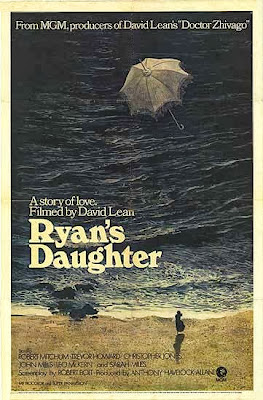
Ryan's Daughter (released in 1970) - Starring Robert Mitchum, Sarah Miles, John Mills, Christopher Jones, and Leo McKern

Sunday, February 6, 2011

Bringing down the House (released in 2003) - Starring Steve Martin and Queen Latifah

How can you wipe away years of stereotypical notions and distrust about the other side of the line? Bringing Down the House, is a comical look into the racial stereotypes ingrained in to the American psyche where color decides the quality of life you lead. Directed by Adam Shankman, the movie stars Steve Martin and Queen Latifah, and is about the coming together of two radically different people and understanding life better.
Peter Sanderson is an uptight successful lawyer whose work compulsions has driven a wedge in his marital life. Peter and his wife Jean are separated and he tries hard to connect with his children. But work pressures, competitive partners and bosses keep him away from home. He tries to date the mysterious “Lawyer Girl” to improve his love life and becomes besotted by the picture she sends him. But soon it is revealed that the photo had Charlene Morton, an over-weight African American convict who was trying to get Peter to fight her case. Charlene lands up at stunned Peter's doorstep pleading for him to take up her case as she had been wrongfully incarcerated. When Peter refuses she blackmails him by threatening to make their conversations public. So after a lot of hiccups he agrees to look in to her case and asks her to masquerade as the children's nanny for the while.


On the work front Peter and his partner Howie try hard to impress Mrs Virgine Arness, an eccentric billionairess to get her to transfer some of her business. Mrs Harness is very condescending to the black community and Peter tries hard to placate Charlene who explodes after her insensitive actions. It is extremely hilarious when Charlene's trick of spiking Mrs. Arness's food comes a cropper with Peter consuming the whole concoction subsequently spending the whole evening hopping to the bathroom. Amidst all controversies, Howie takes a shine to Charlene and even the Sanderson kids get to like her. Charlene teaches Peter to loosen up and slowly brings him closer to Jean, his wife.
Peter regrets his earlier actions and agrees to fight Charlene's conviction. He gathers evidence about her boyfriend who had framed her and overturns the verdict. Charlene and Howie get hitched and Peter reconciles with his wife. Mrs. Arness after a mind-boggling night out with fellow black Americans gets to renew her outlook on life and start life afresh. Her business helps Peter to start on his own, away from his catty competitive colleagues.
This movie is a refreshing look at the underlying racial inequities in American society. The perceived notions about the colored people by the white upper class is laid bare and also the movie offers a insight in to the black societies. It is a feel good movie where the triumph of human sensibilities over narrow walls of race and wealth. It sure tickles your funny bone in-spite of tackling such a weighty issue. The movie was both a critical and box office success. Steve Martin was nominated for the MTV award for the best dance sequence. Queen Latifah for her zesty portrayal won the Teen choice awards and the NACCP awards for the best actress. Her fight with Jean's sister Allison also garnered her the eyeballs.
A great movie for shooing away boring weekends.

Bringing down the House (released in 2003) - Starring Steve Martin and Queen Latifah

Monday, January 17, 2011

Pennies from Heaven (released in 1981) - A musical film starring Steve Martin

Pennies from Heaven is a 1981 Holly wood musical adapted from the BBC drama series of the the same name by Dennis Porter. Porter was nominated for the Oscar for the “best adapted Screenplay category” eventually loosing to the acclaimed “Golden Pond”. Directed by Herbert Ross it stars Steve Martin and Bernadette Peters in the title roles.
This depression era story is about Arthur Parker, a music sheet salesman who is down in the dumps with his relationships and finances. His relationship with his wife hits rock bottom as she frigidly resists his sexual advances. Frustrated by her lack of interest he moves out to sell his music. Joan, Arthur's wife is also un-supportive of his venture to open his own record store. Arthur leaves home threatening never to return.
That fateful day he meets Eileen, a plain school teacher with whom he falls in love at first sight. Eileen leaves with out paying any attention but becomes interested when he follows her to the farm. Soon Arthur and Eileen are engaged in a relationship and he lies to her about his wife. He plays on Eileen's sympathies for a sexual relationship. But soon Arthur returns home to Joan leaving her stranded. Joan and Arthur try to make their marriage work but are frustrated about their different outlook about relationships. Arthur and Eileen on the other hand are sexually compatible with Eileen enjoying his fantasies. Joan reluctantly finances his record store venture, but even that business languishes as customers are scarce. Eileen meanwhile gets pregnant and is fired from her job. She never finds Arthur as all his addresses turns out to be a fake one.


A desperate Eileen is forced to have an abortion and soon is drawn in to prostitution by a pimp, Tom. Arthur and Joan come to terms with their incompatibility and Arthur seeks out Eileen. He finds her as a prostitute and proposition her. Soon they decide to run away to start life anew. But as luck could have it Arthur is framed for the murder of a blind girl whom he helps across a bridge and Eileen runs out on him. Arthur is sentenced to the gallows where he sings out the song “Pennies from Heaven” to underscore the shortness of life. The audience is treated to a dream ending where Arthur and Eileen wind up together.
This movie was a box office disaster even though critical acclaim was more forth coming. The elaborate song and dance routine's sort of bored the audience in-spite of credible acting performances. Steve Martin as a music salesman was appreciated, but the audiences could never accept him in a serious role especially after the success of the comic caper like “Jerk”. It was nominated for 3 Academy awards and Golden Globes. Bernadette Peters won the golden Globe for her portrayal of Eileen. The song and dance numbers are still popular and are lip synced. But still the film lacks a soul to make the audience feel an empathy for the poor sexually starved characters.
I would never recommend watching this movie, better depression era saga's are made for movie lovers.

Pennies from Heaven (released in 1981) - A musical film starring Steve Martin

Tuesday, December 28, 2010

Conquest (released in 1937) - Starring Greta Garbo, Charles Boyer and Reginald Owen

Conquest is a movie about Countess Marie Walewska who becomes the mistress of Napolean Bonaparte to safeguard the interests of her country. This enigmatic polish countess was the mistress of Napolean and even comforted him during his days in exile.
This movie stars Greta Garbo as Marie Walewska along with Cajrles Boyer, Reginald Owen, dame May Witty and others. The movie was adapted by S. N. Behrman, Samuel Hoffenstein, Helen Jerome and Salka Viertel from the novel Pani Walewska by Waclaw Gasiorowski and it was directed by Clarence Brown.
Marie Walewska is the beautiful wife of the polish count Walewska. In the winter of 1807,the pillaging Russian soldiers over run Eastern Poland, the land of Count and Countess Walewska. They make fun of the aging Count and his young wife and they become mortally afraid of the Russian Army. Marie's brother informs her about the exploits of Napoleon and when Marie briefly meets him at a church she is suitably impressed as he is enthralled by her beauty. After two months she is formally presented to the French emperor at the court and she is grateful that Napoleon makes no allusion about their earlier meetings.


Napoleon is totally taken in by Marie and send her love notes begging her responses. She confides in her husband who tries to take her away. But the Polish leaders, seeing a chance to liberate Poland, urge her to give in to Napoleon. A patriotic Marie gives in and begins to have an affair with Napoleon. Even though she trades her virtue for her country, she slowly falls in love with the charismatic emperor.
Marie's husband leaves for Rome and gets a divorce which enables her to stay with the emperor. Napoleon takes up his quarters within Marie's home and their idyllic trysts are only marred by Napoleon's frequent absences. Soon Marie is pregnant and she awaits the birth of her baby in secret. She leaves to meet Napoleon in Vienna where she comes to know that he is to marry Princess Marie Louise of Austria of the Hapsburg dynasty. He tells her the blue bloodline of the Hapsburg's would enable him to create his own bloodline of rulers.
A devastated Marie returns to Poland and gives birth to a son Alexandre. She never informs Napoleon about his son. Soon the fortunes of Napoleon change for the worst and he suffers successive defeats at the hands of the Russians and the English. After the disastrous campaign of Waterloo napoleon is exiled to the Island of Elba. Marie and her son live with him till he dies.
This movie was one of the most disastrous movie in Greta Garbo's career and was a loss making venture for MGM studios. Actually it is said to have marked the downfall of Greta Garbo's career with her being more and more reclusive. The costumes, cinematography, sound, music and art are to perfection and Garbo looks the part of the ethereal beauty Marie. But it is still a critically acclaimed movie which presents the facts with considerable accuracy. The movie was nominated for two Oscars namely, for the Best Actor in a Leading Role (Charles Boyer) and Best Art Direction (Cedric Gibbons and William A. Horning}.

Conquest (released in 1937) - Starring Greta Garbo, Charles Boyer and Reginald Owen

Friday, December 24, 2010

Grand Hotel (released in 1932) - Starring Greta Garbo, John Barrymore and Joan Crawford

This American drama film is directed by Edmund Goudling and is adapted from a the novel Menschen im Hotel by Vicki Baum. This movie stars Greta Garbo, Joan Crawford, Lionel Barrymore and John Barrymore.
This movie opens with Doctor Otternschlag, a disfigured veteran who stays permanently at the Grand Hotel remarking “Grand Hotel....People come and go. Nothing ever happens”. After this seemingly innocuous remark, acts as a catalyst for a chain of events at the hotel. Baron Felix Von Geigern, a jewel thief and a master card player stays at the hotel undertaking small time theft and forgery. He is a noble man who has lost his fortune. The Baron befriend Otto Kringelein, a small time accountant who is fatally ill. He stays at The Grand to spend his last days in the lap of luxury. Kringelein's ex-boss is Director Preysing who is an wealthy industrialist staying at the Grand to ink a large deal. He hires a stenographer Flaemmchen who wants to be an actress. She shows Preysing her audacious photographs and hints that she is willing to do anything to be a star. Preysing soon starts an affair with her.


Another guest, Grusinskaya is a famous ballet dancer who is tired of the world. She unexpectedly returns home and finds the Baron rummaging through her jewels. She says ”I want to be alone”, mistaking him to be a part of the staff. But the Baron stays and engages in a conversation which brings them both closer. After the conversation the guilty Baron returns her jewels and Grusinskaya invites him to accompany her to Vienna. The Baron agrees and engages to meet her at the train station.
The Baron joins Flaemmchen and Kringelien for afternoon tea, where a coquettish Flaemmchen cajoles Kringelien to dance. Preysing who arrives is consumed with jealousy and imperiously tells Flaemmchen to stop. All are disgusted by his uncouth behavior and Kringelien gives him a piece of his mind. Preysing gets angry and the situation is diffused by the baron's intervention. The Baron tries to steal from the intoxicated Kringelien, but seeing his pathetic condition returns his wallet back. He turns his attention to Preysing instead.
But as fate would have it the baron is caught by Preysing stealing his papers and in the scuffle bludgeons him to death. Flaemmchen arrives at the scene and runs to Kringelien who confronts Preysing. They summon the police and Preysing is summarily arrested. Oblivious of the Baron's fate, Grunskaya waits at the train station for him and grieves when the Baron does not arrive. Flaemmchen and Kringelien leave for Paris to try a new cure and vow to be be with each other. As they leave the hotel, Doctor Otternschlag once again observes, "Grand Hotel. People come and go. Nothing ever happens.".
This movie may be a tedious watch for many as there are lot of a interconnecting events with no story to hold your attention. Btu it is critically acclaimed movie. The film is the only motion picture to have won the Academy Award for Best Picture, with that category being the sole category in which it was nominated. In 2007, Grand Hotel was selected for preservation in the United States National Film Registry by the Library of Congress for being "culturally, historically, or aesthetically significant."
Another cause for its fame is Garbo's famous opening line “I want to be Alone” which is often alluded to her in real life. Garbo's reclusive nature fueled speculations that these lines were actually spoken by her in real life.

Grand Hotel (released in 1932) - Starring Greta Garbo, John Barrymore and Joan Crawford

Monday, December 20, 2010

Ninotchka (released in 1939) - A comedy starring Greta Garbo and Melvyn Douglas

This is the penultimate movie starring Greta Garbo and is an all out comedy which is a first for the actress, who was always revered for her tear jerkers. This movie made by MGM is directed by Ernst Lubitsch and also stars Melvyn Douglas opposite Garbo. This movie portrays the communist Russia to be a drab place compared to a Parisian Joie de vivre. It is one of the movies which makes veiled criticism about Joseph's Stalin's autocratic rule.
Three Russian agents, Iranoff, Buljanoff and Kopalski are deputed to sell the confiscated jewels of Countess Swana to raise money for the party. They reach Paris and stay in a posh hotel where they are overheard by one of the waiters Alexis Rakonin, an Impoverished Russian Count. He alerts Swana who is residing in Paris and her lover Count Leon d'Algout promises her the return of her jewels. Count Leon befriends the three men and show them the sights and signs of Paris which makes them wonder at their drab life style. Meanwhile Swana obtains an injunction preventing the sale of the jewels in Paris. The higher ups in the Soviet Union are furious by the turn of events and send their super spy "Envoy Extraordinary" Nina "Ninotchka" Ivanovna Yakushova to bring the three men home and facilitate the sale of the jewels. Ninotchka is a stern woman who thinks of Russia and her duty. After chastising her comrades, she also tours Paris soaking in the architectural wonders. She meets Leon who tries to flirt with her and gets a royal ignore. For Ninotchka he is an example of western decadence and soon learns his identity. Leon also comes to know about her and is intrigued by her persona.


Leon follows her to a cafe and jokes with Ninotchka to get to know her better. Even though his jokes fall flat, he manages to melt her heart. Soon both enjoy each others company and Ninotchka becomes a changed woman. She dresses and enjoys the opulence of the city and soon falls in love with the count.
A much drunk Leon and Ninotchka return to the hotel and she tries the jewels on Leon before falling asleep. Next day she gets a call from Swana that she had the jewels stolen from her room by Rakonin and names her price for their retrieval – Leon. Ninotchka agrees and goes back home. Leon pursues her and meets her when she reaches Istanbul on her next assignment. He persuades her not to leave and they live happily ever after.
This movie was banned in the Soviet Union for criticizing Stalin and Communism. But it still went on to be one of the top grosser of the year. It also snagged four Academy Award nominations including the one for Garbo, for the best actress.
In 1990, Ninotchka was selected for preservation in the United States National Film Registry by the Library of Congress as being "culturally, historically, or aesthetically significant". It was also included on two American Film Institute lists and was also included on Time Magazine's All-Time 100 Movies.

Ninotchka (released in 1939) - A comedy starring Greta Garbo and Melvyn Douglas

Thursday, December 16, 2010

Camille (released in 1936) - Starring Greta Garbo, Robert Taylor, Lionel Barrymore, and Elizabeth Allan

The movie Camille starring Greta Garbo and Robert Taylor has inspired countless songs and love sonnets for the cupid struck heart. This romantic drama made the song “I'll Love Like Robert Taylor, Be My Greta Garbo.” by Milton Benjamin is the great testament for the chemistry shared by the all time greats. This movie was directed by George Cukor was a success at the box office and was also critically acclaimed. The picture is based on the 1852 novel and play La Dame aux Camélias by Alexandre Dumas.
Marguerite Gautier is the Lady of the Camellias because of her marked preference for these flowers. This beautiful French courtesan was generous and large hearted which marks a sharp decline in her savings. To arrest the downward spiral of her income, her friend Providence urges her to find a rich patron. She plans to introduce her to Baron de Varville, a rich man completely besotted by Marguerite's charm. But at the theater Marguerite meets Armand and falls for him thinking him to be the Baron. But she is forced to leave Armand's side when the real baron arrives, but gives him the key to her apartment.
Marguerite becomes the baron's mistress and has a lavish life style. When the Baron leaves for Russia she stays back and again meets Armand. Armand tells her about his deep feelings and urges her to come away with him. Marguerite asks him to come later, but has to rebuff him as the baron has returned.


A heartbroken Armand asks his father for some money and plans to travel the world. Marguerite on receiving his bitter note of farewell goes to met him and he persuades her to come to the country with him. At the country Marguerite's health improves and they spend a gay summer falling in love with each other again. But Armand's father concerned about his son reaches his place and begs Marguerite to leave his son alone. He reminds her about her position in the society and the doom which would fall on Armand if seen in her company.
A grieving Marguerite returns back to the Baron who takes her back but on lesser generous terms. She resumes her life as a courtesan, but the rigors of this life ruins her health completely. Severely ill and in debt she writes to see Armand one last time. Armand returns to her and Camille dies in his arms assuring herself that she never was more happier.
This movie received four academy award nominations including the one for bEst actress for Greta Garbo. She won the New York Film critics circle award for the best actress. It also made the times list of 100 great movies ever made.
This romantic movie is one tear jerker ever made. It tugs at your heart strings and Greta Garbo as the beautiful and vulnerable courtesan with the heart of gold is splendid. Her chemistry with Robert Taylor is something unmeasurable. A really good watch for those rainy days with a blanket and popcorn.

Camille (released in 1936) - Starring Greta Garbo, Robert Taylor, Lionel Barrymore, and Elizabeth Allan

Monday, December 13, 2010

Anna Christie (released in 1930) - Starring Greta Garbo, Charles Bickford, George F. Marion, and Marie Dressler

Anna Christie is a landmark film where Garbo makes the successful transition from the silent era to the talkies. It is said that the studio had prepared her assiduously to make the change with success, unlike many other stars who failed with sound. MGM coached Garbo so well that even her Swedish accent was completely removed. Additional publicity material with the tag-line “Garbo Talks” generated more interest in this movie. This movie was adapted from a Pulitzer prize winning play by Eugene O'Neill and was also a silent movie staring Blanche Sweet.
Anna Christie was directed by Clarence Brown and starred Greta Garbo, Charles Bickford and George F Marion. This movie was nominated for 3 academy awards including the one for best actress for Greta Garbo.
Garbo is Anna Christie, a waterfront prostitute who comes in search of her father to the barge. Her father had sent her off to a relative's farm and the abuse had forced Anna to run away and become a prostitute. She never forgives her father for abandoning her. Anna enters a saloon where her father's mistress is drinking and gives her first dialogue, the immortal line “Gif me a visky, ginger ale on the side, and don' be stingy, baby." Marthe, the mistress soon deduces her identity and tells her that her father Chris was hoping to see her as a lady and she would have to be one to refrain from hurting him. Anna agrees for the deception and lives with Chris as the dutiful daughter he is so proud off.


Anna and Marthe rescues a drowning sailor Matt and brings him to the barge. Soon an intimacy develops between the two and they even go on a date to Conney island. But Chris, her father disapproves of the relationship because he want her settled with a stable marriage and a house on the land. Anna also has secrets of her own and Marthe urges her to come clean to prevent a confrontation between Matt and Chris. She reveals her sordid life as a prostitute and Matt leaves in disgust. As Anna picks the broken pieces of her life she finds Matt waiting for her. He tells her that mistakes were made in the past by both of them and he is happy to be the first one to claim her love. The film ends in a happy note with a grand reunion.
The mystique of this film is all the more increased, as it is one of the last movies that Garbo posed for and promoted. She had her last photograph shot with the Maharajah of Kapurthala before retiring from public life. This movie was a monster hit of the year and also won accolades for Garbo's seamless transition and sound. It was also adapted in to the German Language and proved successful in the European markets. It also was made in to the silent version too, to cover more theaters. I would like to add that the secret allure of the movie is Garbo itself. See it for the amazing histrionics of the wonderful Greta Garbo

Anna Christie (released in 1930) - Starring Greta Garbo, Charles Bickford, George F. Marion, and Marie Dressler

Monday, November 22, 2010

You Can't take it with you (released in 1938) - starring James Stewart, Jean Arthur, Lionel Barrymore and directed by Frank Capra

This movie was directed by Frank Capra who adapted it from the Pulitzer prize winning Broadway show by Kaufman and Hart. It stars the legendary James Stewart and Jean Arthur in the title roles. It also starred Lionel Barrymore, Edward Arnold and Spring Byington. Lionel Barrymore was suffering from arthritis and acts in crutches for the entire movie.
Tony Kirby is the heir of a vast business empire whose father Arnold.P.Kirby is a arms dealer and a real estate magnet. Kirby Sr has one ambition, which is build a big ammunition plant and is busy buying vast tracts of land to seal the deal. But one thorn in the flesh is Martin Vanderhoff who refuses to sell him homestead because it is filled with memories. Kirby offers him four times the money but Vanderhoff says no as family and memories are more important than money even during the great depression.
The Vanderhoff's are the most eccentric, screwball family with a devil may care attitude. They never care for money, success or have any ambition. Grandpa's daughter Penny aims to be a writer with little talent and has a small kitten as a paperweight.


Granddaughter Essie has fantasies of becoming a ballerina even as her, Russian teacher exclaims, 'She stinks!' -- and Essie's oafish husband Ed (Dub Taylor) plays the xylophone while wearing his old football jersey. There are other bohemian characters roaming around the house making up explosions along with a mad butler and a maid. To cap it up is Grandpa Vanderhoff who slides down the banisters and ends up breaking leg. Well that is to prove that he is a fun guy who values family fun. The one sweet normal girl is Alice Sycamore who works as a secretary in Tony Kirby's office.
Alice and Tony predictably fall for each other and plan to get hitched. But the perennial hitch of family sanction comes in the way. Anthony Kirby and his snobbish wife are alarmed at Tony's choice but try to humor him by agreeing to meet the girls family. Alice plans a grand dinner and her family agrees to behave. But a wrong date and the wrong meeting makes the introduction explosive as the blue blooded Kirby's are exposed to the bohemian chic of the Vanderhoff's'. Then all goes downhill and the engagement goes in flames.
But love does triumph in the movies changing the life of the Kirby's forever. Kirby's learn to have fun and Vanderhoff triumph as a paragon of virtue. The whole cliché ending of “money can never buy love” happens and everybody lives happily ever after by being poor. This movie had seven academy award nomination wining two -the best picture and the best director trophy. This was the second Oscar for Frank Capra in five years. The box office success was also phenomenal and is treated as one of the nicest romantic comedies. Well if you like romance and enjoy poor vs rich dramas, this one is for you.

You Can't take it with you (released in 1938) - starring James Stewart, Jean Arthur, Lionel Barrymore and directed by Frank Capra

Saturday, November 20, 2010

The Last Horizon (released in 1937) - starring Ronald Colman and Jane Wyatt, and directed by Frank Capra

This 1937 movie directed by Frank Capra is adapted from the novel of the same name by James Hilton. This fantasy movie starred Ronald Coleman and Jane Wyatt.
Richard Conway is a man of many talents and is the new British Foreign Secretary. He is a famous Writer, Soldier and highly sought after diplomat. As an armed revolution threatens China he rescues the stranded foreigners in Baskul and escapes with the last of the evacuees. But unknown to him their plane is hijacked and crashes in a remote Himalayan kingdom killing their abductor. They are rescued and taken to Shangri-La, an idyllic valley sheltered from the bitter cold which is headed by a mysterious head Lama.
Here the passengers find their idyllic life very much to their liking. Most of the newcomers grow to love Shangri-La, including paleontologist Alexander Lovett, swindler Henry Barnard, and bitter, terminally ill Gloria Stone, who miraculously seems to be recovering. Richard finds the lovely Sondra whose allure and beauty mesmerizes him. But his younger brother George and another young woman Maria from Shangri-La are bent upon leaving the place. They constantly try to persuade Richard to leave the place.


Richard gets an audience with the Lama, who tells him that his presence in Shangri-La is no accident. His talent and wisdom had impressed them to choose him to be the leader of Shangri-La. The Lama informs him that Shangri-La is a mystical place where people do not age, fall sick or wither with age. He designates Richard as his heir and passes away.
George, depicts the story as mere fantasy and persuades Richard to leave the place. They move on with Maria who upon leaving Shangri-La reaches her real age and dies. George looses his sanity and commits suicide. Richard continues his journey and slowly looses his memory. But on the voyage back to England he remembers all and jumps from the ship rendering him untraceable. He anyway gives an account of his adventures to others traveling with him. Then he makes him way to Shangri-La to continue his task entrusted to him by the Lama.
The movie has major deviations from the book and this has been a sore point with the audience who wanted a faithful adaptation. This movie was one of the expensive movies made in the 30's which drove a rift between the studio and the director. It was not received well and never recovered its money for a long time, meeting costs after 5 years. After it was re-shot and edited it was released to garner some box office success. The critical reception was a mixed one with some critics praising it and others rubbishing the work. It was nominated for 7 academy awards wining the award for Best Art Direction, and Best Film Editing. It lost the award for the best Picture narrowly to the ultimate winner “The life of Emile Zola”. But the movie pioneered high technological advances which were used to film the Himalayan Scenes. A watchable movie if you are interested in the sci-fi Genre.

The Last Horizon (released in 1937) - starring Ronald Colman and Jane Wyatt, and directed by Frank Capra

Thursday, November 18, 2010

Going My Way (released in 1944) - starring Bing Cosby and Barry Fitzgerald

This 1944 blockbuster was directed by Leo McCarey staring Bing Cosby and Barry Fitzgerald. This movie was the biggest hit and cemented the place of Bing Cosby as one of the biggest guaranteed box office draw of the 40's.
This movie is about a young priest who takes over the parish from a veteran and the feelings of displacement and jealousy involved in this take over. Father O'Malley is a young priest who is sent to the parish of St Dominic's in poor neighborhood of New York. He is to take over from Father Fitzgibbon for whom age is not on his side. The parish has nothing much going on for them, except the petty gossip and rivalries. Soon Father O'Malley revamps the entire going on's, reinvigorating the youth.
Father Fitzgibbon feels the parish slipping away from his hands as he watches O'Malley in action. The younger parish priest gets a grip on everything like the parish interludes and youthful capers. And slowly resentment sets in Fitzgibbon's mind. But O'Malley is aware of the confusion in the older man's mind and he is kind and considerate. He slowly chips away the armor and engages him.


O'Malley and his friend Father Timothy "Timmy" O'Dowd take Father Fitzgibbon for golf and he thoroughly enjoys it calling it the great outdoor pool. Soon he opens up about his parish life of past 50 years. He also mentions about his mother who is pushing 90 living in Ireland. O'Malley has his own personal demons to deal with with his interrupted love affairs. Soon pieces start to fall in to the right places. The choir is formed and the youth movement gains momentum with the prime mischief maker young Tony Scaponi comes to the fold.
Then tragedy strikes when the church is damaged in a massive fire on Christmas eve. But the spirit of togetherness kindled by Father O'Malley cannot be extinguished so soon. The newly awakened parish rally against odds and celebrate Christmas as a family in a temporary church. At this momentous occasion, Fitzgibbon's elderly mother reaches him all thanks to O'Malley efforts. But the joyous occasion has a sad tinge with O'Malley being transferred to another parish. But the builder builds for others and the fruits of his creation may not be for his sake but for the restoration of others. As the parish rejuvenates and embraces each other, O'Malley slips away for his new task.

This movie was a monster hit and was nominated for 10 academy awards winning seven. Bing Cosby won the Oscar for Best actor and Barry Fitzgerald won for the best supporting actor. Barry was nominated for the best actor award and lost to Cosby. After this the Oscar committee restricted the nominations to one category. It also won the Oscar for best picture, best director, best screenplay and best song. It was followed the next year by a sequel, The Bells of St. Mary's.
In 2004, Going My Way was selected for preservation in the United States National Film Registry by the Library of Congress as being "culturally, historically, or aesthetically significant". A feel good movie worth a watch.

Going My Way (released in 1944) - starring Bing Cosby and Barry Fitzgerald

Friday, October 22, 2010

The Big Broadcast (released in 1938) - Starring W.C. Fields and Bob Hope

This movie is a Paramount Movies release and is the last of the big broadcast series. It stars the irrepressible duo, WC Fields and bob Hope along with Dorothy Lamour, Shirley Ross and Martha Ray. This movie is directed by Mitchell Leisen and consists of a variety shows aboard a ship.
Buzz Fielding, the famous Radio host is incarcerated in prison because of the non payment of alimony to his three wives. His lover, Dorothy Wyndham pawns her engagement ring to get him out on bail. Two ships SS Gigantic and SS Colossal are engaged in a trans Atlantic Race from New York City to Cherbourg. France. T. Frothingal Bellows to help Gigantic intends to send his brother SB Bellows and his unlucky daughter Martha on Colossal because SB causes accidents where ever he goes.
But as luck could have it, because of a golfing mix up, SB' golfing cart ends up in SS Gigantic and the unlucky duo are inadvertent passengers. Buzz fielding is the entertainer at the ship and to his utter discomfiture, his three wives, Cleo, Grace and Joan, along with current flame Dorothy travel together in Gigantic.


The first performance on the ship is by Shep Fields and His Rippling Rhythm (themselves), who play "This Little Ripple Had Rhythm" for a cartoon sequence. Buzz introduces the Mexican singer Tito Guizar who regale the audience. Meanwhile Grace distracts SB and Dorothy who brings food for the ships power source inventor Bob, are attracted to each other. Dorothy and Bob sing "You Took the Words Right Out of My Heart”. Opera Diva Kirsten Flagstad sing “The Ride of the Valkyries" and is followed by Honey Child, a comedy routine.
In the mean time the Colossal is way ahead of the Gigantic and Buzz has a tough time manipulating his wives. As Buzz lean depressed on the hull, Cleo cheer him up and they reminisce their happy days. Buzz and Cleo realize they have feelings for each other and give the audience a slice of their heart through “Thanks for the Memory”. Mean while the Gigantic has a power failure and Dorothy and Bob work together to fix the power source. With the renewed power source Gigantic close on to the Colossal while the comedy routine by WC Fields and Martha continue.
At the end Buzz and Cleo renew their romance and sing “the Waltz lives on” which fine tunes, polka, Waltz and a host of other dances. Gigantic closes on to the colossal and edges past it to win the race. Dorothy and Bob find love along with the many other characters.
The film has a tame and abrupt ending, but lives up to its reputation as the last and best of the big broadcast films. It won an Oscar for the beast original song by Ralph Rainger and Leo Robin for the song Thanks for the Memory. This movie has the unique distinction in being Bob Hope's first feature film. The DVD of the film has been released and one can enjoy it to this day as an ode to the simpler musical times far gone.

The Big Broadcast (released in 1938) - Starring W.C. Fields and Bob Hope

Thursday, July 15, 2010

Star Wars – The Empire Strikes back (released in 1980) - directed by Irvin Kershner, and starring Mark Hamill, Harrison Ford, and Carrie Fisher

Continuing where New hope has left, George Lucas pens the story of Luke, Leia and Solo's adventure's through galaxies, planets and space battles.
Despite the destruction of the Death Star, the rebel forces have suffered massive causalities and are forced in to hiding in an icy planet Hoth. Darth Vader, obsessed with the capture of Luke has sent in probes across the galaxy to find information. One of the probes reach Hoth and crashes as a meteor. Luke goes to find it and is captured by an evil predatory creature called a Wampa. Luke with the help of the force retrieves the light saber to slice the Wampa and escape. But he soon collapse out of cold and exhaustion. Hans Solo who rescues him and brings him to the base. Luke has visions of Obi-Van-Kenobi exhorting him to go to Dagohaath and train under the legendary Jedi master, Yoda.
The imperial probe sends in the position of Hoth as a rebel base and is destroyed by Darth Vader. But Rebel troops evacuate and Solo and Leia leave aboard Millennium Falcon. Darth Vader tries to capture them but they manage to slip away. Mean while Luke reaches Dagohaath and s under intensive training with Yoda. Darth Vader under takes Boba Fett a bounty hunter to capture Hans Solo. Hans and Leia reach Solo's friend Lando Clarissian's Cloud city for asylum. But Clarissium, threatened by Vader turns them in. Hans is frozen and is given to Boba Fett as a bounty to be presented to Jabba the Hutt. Leia and Hans fall in love with each other but are separated.


Luke under training gets premonitions of Hans and Leia and leaves to rescue them promising Yoda to return and complete his training. Meanwhile Lando Clarissium chastened by Vader's betrayal returns to rescue Leia and Hans. But Boba Fett flies away with Hans to Jabba the Hutt. Luke who goes to fight Vader is attacked and cornered wherein Vader offers him great riches to join him. But Luke rebuffs Vader's offer which angers him to slice away his hand. As an ultimate inducement he reveals to Luke that he is his father. A stunned Luke lets himself to be sucked in to the training chute and sends a telepathic message to Leia. Leia along with Lando rescue him and carry him aboard the rebel ship where he is fitted with a new hand. The film ends with Luke's new hand and the staggering revelation about his father.
The second episode was one of the most eagerly awaited movies and not surprisingly the box office scorcher of that year. George Lucas and his team had delivered an iconic classic and again was followed by audience adulation and critical acclaim. It won Oscars for the best special effects and best back ground score. In addition it also won the Golden Globes, Grammy and BAFTA awards. The Saga continues with new viewers and even in the face of more technologically advanced films of the century Star Wars holds its on through sheer brilliance. The Force is still with the movie.

Star Wars – The Empire Strikes back (released in 1980) - directed by Irvin Kershner, and starring Mark Hamill, Harrison Ford, and Carrie Fisher

Star Wars Episode IV – New Hope (released in 1977) - the start of the Star Wars series

New Hope is one of the first films to be released among the six movies depicting the star war saga. Directed and conceived by the legend George Lucas, the Star Wars movies are iconic and have influenced generations, becoming a cult classic. This sci-fi space fantasy film debuted in 1977 is one of the top grosser at the box office also pioneering the production of endless movie merchandises and successful sequels.
As the opening line goes “in a galaxy far far away” a young farm boy Luke Skywalker comes across two droids R2D2 and C3PO. While cleaning the druids Luke accidentally triggers the holographic message in R2D2 in which Princess Leia has hidden the plans for the death star. The Death Star is a battle station designed and constructed by the evil Sith Emperor Palpatine and manned by his trusted lieutenant Darth Vader. Leia asks the listener to find Obi-Van-Kenobi a Jedi Knight to help her.
R2D2 followed by Luke finds the old hermit Ben, who reveals himself as Obi-Van-Kenobi and asks Luke to utilize the force to train himself as a Jedi Knight. Jedi are skilled practitioners of the “Force” who fight the unjust to maintain the balance in the universe. Their order are highly trained knights who use the light sabers to protect the weak. Luke returns to find his uncle and aunt murdered and his planet Tatooine under siege by the imperial forces. He returns to Ben and they plan to escape with the droids to join the rebel forces headed by Princess Leia.


They hire the good hearted smuggler Hans Solo and his co-pilot Chewbecca to ferry them across Tatooine in the space Vehicle Millennium Falcon. Meanwhile Princess Leia is imprisoned in the death star and is tortured by commander Tarkin to reveal the rebel army base. He threatens to annihilate the planet Alderaan. Leia pretends to cooperate but Tarkin destroys the planet anyway. Meanwhile the Millennium Falcon is trapped by the tractor beam of the Death Star and is forcefully captured. Hans solo, Luke and Obi-Van-Kenobi are captured. They rescue Princess Leia and flee the death star to the rebel base while Ben Kenobi is killed by Darth Vader.
Luke and Leia organize a daring guerrilla attack to destroy the death star. As their fighters attack the star, Darth Vader himself comes in to defend it. Soon thrilling fighting is engaged and ultimately with the help of Hans Solo the death star is destroyed by Luke Sky-Walker. Both Solo and Skywalker are honored by Leia and an uneasy truce prevails in the universe.
What can you say about Star Wars? The box office success is unparalleled in history spawning video games, books, sequels and toys. Both adults and kids are ensnared by this complex saga of love, hate and deception. Awards it has many, notable being the 7 Oscars, Golden Globes, Grammy and the BAFTA nominations. Nothing compares to the iconic value of the film which can be best described as an experience on its own with special effects and great dialogue.
Star Wars is a must watch for any citizen of the earth and denizens of other planets. As you may watch this thrilling adventure “May the Force be with you”.

Star Wars Episode IV – New Hope (released in 1977) - the start of the Star Wars series

Monday, July 5, 2010

Witness (released in 1985) - Starring Harrison Ford and Kelly McGillis, protecting a young witness

A thriller directed by Peter Weir starring Harrison Ford, Kelly Macgillis and Lukas Haas, it was released in 1985 to critical and box office acclaim.
The plot involves a young Amish widow Rachel Lapp who is taking her son Samuel for a trip to Baltimore to see the outside world. Samuel in the rest room witness a murder of a police officer Zenovich. Samuel sees only one of the murderers who happens to be a tall black man. Rachel and Samuel are taken by the police as witnesses and are introduced to captain John Book and Sergeant Carter. Samuel as the principal witness has to identify the killer and fails to find the right man in the police line-up. As he saunters around in the police head quarters he sees a newspaper clipping of a police officer Mcfee and recognizes him as the killer.
Book reports this development to his superior, Captain Paul Schaffer and is asked to investigate further. He informs Book, that Mcfee had raided a drug hideout and did not report his findings. Zenovich was killed for investigating Mcfee's drug offenses. Schaffer advices Book to keep the report a secret, till they can find some clinching evidence.


Book escorts Rachel and Samuel to a safe hotel where they are ambushed by Mcfee. Book shoots Mcfee and realizes that Schaffer would be the traitor. Book seriously wounded decides to go in to hiding with the Lapps. He calls up Carter and asks him to remove all the files relating to the Lapp's and his investigations. Book informs Rachel about the situation and escorts them to their home in Lancaster city.
A severely wounded Book, tries to leave the Amish colony after he ha safely escorted the Lapps. But he faints having lost a lot of blood and Rachel's father in-law reluctantly agrees to keep him there. As he recovers he helps Eli, Rachel's father-in-law around the house doing small carpentry and other odd jobs. He finds it difficult to adjust to the Amish way of life, but soon it grows on him. He takes Samuel under his wing and bond starts to develop between them.
Various culture clashes happens as Book adjusts himself to the Amish way. He is forced to surrender his fire arm as the Amish believe in non violence. He does the community jobs like building towers for residents and Samuel helps him to work the machines like a silo. Book enjoys his life with the Amish and also develops a soft corner for Rachel. He also fights others who mock the Amish. Rachel and Book are attracted to each other to the discomfiture of her suiter Hockleitner. Eli and other residents also disapprove of this alliance.
Book in the mean time telephones Carter for information and the villains kill him. Realizing that the game has gone too far, he calls up Schaffer and challenges him. Soon Schaffer and Co reach Lancaster and both Mcfee and Fergie are killed. Schaffer holds Rachel hostage, but the arrival of all residents, make him realize that his game is up. Book arrests and hands him to the Sheriff. But he also comes to the understanding that he cannot be part of the Amish for ever, and returns to the world with his love for Rachel.
Witness was a box office winner and was also nominated for 8 academy awards wining two for the best screen play and editing. It was also a toast at the BAFTA Awards. A good simple movie.

Witness (released in 1985) - Starring Harrison Ford and Kelly McGillis, protecting a young witness

Tuesday, June 29, 2010

The Longest Day (released in 1962) - starring John Wayne, Robert Mitchum, Henry Fonda, Robert Ryan, Sean Connery and many more - the attack on Normandy

What can you say about a war which killed and robbed the young men of their most valued possession, their future? The Longest Day is the story about that day where men and women gave their lives for peace. It tells you about the intrigues, planning, objectives, military strikes which leads to the ultimate Normandy landings to defeat the Germans.
Longest day is adapted from the book by Cornelius Ryan who did the screen play for the movie. Directed by a series of directors like Ken Annakin, Andrew Marton, Bernhard Wicki and Darryl F Zanuck, the movie boasts of a stellar cast of John Wayne, Robert Mitchum, Henry Fonda, Robert Ryan, Sean Connery, Rod Steiger, Mel Ferrer, Robert Wagner, Eddie Albert, Edmond O'Brien, Richard Burton, Kenneth More, Peter Lawford, George Segal, Richard Todd, Red Buttons, John Gregson, Leslie Phillips, and many more.
The opening scene of the film shows us the young soldiers indulging in a play of cards and the camera pans to reveal the large number of them concentrated in the barracks ready for the fighting. Then you can see the German soldiers and officers debating the possibility of the attack. Many Germans do not anticipate the attack on Normandy. Then comes the scene where a German soldier distributing tea to the officers looks up to the horizon seeing almost five thousand ships and just gasps. And then the ships start firing.


The Paratroopers are airdropped into the enemy territory with of them stuck on a steeple forced to watch the battle from above. Long shots of French troops running in to battle with German planes mowing them down is one cinematic spectacle. There are real poignant situations where allied and German troops march side by side with out even knowing and the murdered and wounded in the streets of Normandy helped by the locals.
This movie also shows the German point of view, with their war preparedness as well as their Bureaucratic wrangles and indecisiveness. The Germans expecting an attack on Calais (Hitler was expecting an attack there based on a skilled program of deception), are caught unawares at Normandy. The film depicts the desperation of German officers like Rommel who understands that the war is fought and won on the beaches.
All the officers like General Eisenhower, Theodore Roosevelt Jr, Norman Cota, John Howard and all soldiers are almost accurately pictured. Another interesting feature is that all the soldiers speak their own mother tongue which is delivered to the audience through subtitles. I feel that this is more of an anti-war film because it does not show the battle but the men who sacrifice a lot through battle. At the end of the movie you are overcome with respect for the dead irrespective of the nationality for they did what you wouldn't do.
This movie is shot entirely in black and white to give you the stark picture of the war. It was one of the box office successes too. It won the Oscars for best cinematography and special effects. Also nominated for 5 other awards including the best picture it has raked up numerous other awards too. See it for the men who fought for to keep civilization from going under the rule of tyranny.

The Longest Day (released in 1962) - starring John Wayne, Robert Mitchum, Henry Fonda, Robert Ryan, Sean Connery and many more - the attack on Normandy

Sunday, June 27, 2010

On Golden Pond (released in 1981) - starring Henry Fonda, Katherine Hepburn, Jane Fonda and Doug McKeon

Released in 1981, the screen play was adapted by Ernest Thompson from his play. Directed by Mark Rydell this movie boasts of a stellar cast of Henry Fonda, Katherine Hepburn, Jane Fonda and Doug McKeon.
Have you got tired of watching mindless revenge drama's, lust, anger and sex? Then you need to get hold of On Golden Pond. The simple nuances of love, relationships, kinship and mortality is presented in this film that leaves the viewers spellbound. You leave the movie not with tears but with an uplifting feeling in your soul.
The story begins with the sexagenarian couple Norman and Ethel Thayer arriving at their summer cottage at the golden pond to spend their vacations as they had done for the last fifty years. Norman is a grouchy old professor who ribs everybody in the wrong way. Ethel, his ever suffering wife understands his behavior and sense of humor. Some great scenes about their camaraderie comes through creating cinematic history. Ultimately Norman knows that Ethel understands and completes him.


Arriving at the cottage is his middle aged estranged daughter, Chelsea to celebrate his birthday She is accompanied by her fiancée, Coleman and his son eight year old Billy. Norman's acid tongue and repartees soon make the situation tense, but the night passes on. The next day Chelsea and Coleman depart to Europe for a vacation leaving Billy in the cottage.
Norman and Billy are forced to spend time together and Norman grudgingly accepts his young friend. In Billy he finds a chance to parent a young child as he had never tried to do with Chelsea. Norman does not leave this chance and takes young Billy under his wing, teaching him fishing and reading treasure island with him. Billy with his silly childish ways builds a bond with Norman with Ethel.
Soon they are enjoying the vacations, with occasional mishaps like a boating accident bringing them closer. Meanwhile Chelsea arrives from Europe sans her fiancée and the good news that she is married. Seeing her father and Billy together, she confesses her resentment about Norman. She feels that she was neglected always because Norman wanted a boy. But a heart tot heart talk with Norman calms her troubled heart.
Norman too is confronted with his mortality as he suffers a mild heart attack. Ethel and he understands the value of the time spent together. Chelsea and Billy depart with a promise of staying in touch. Norman and Ethel also depart hoping to comeback next summer.
This is the last movie of Henry Fonda and no better curtain call could be there for his illustrious career. He won an Oscar for his portrayal of Norman Thayer. On Golden Pond went on to win 5 Oscars with 10 nominations. Katherine Hepburn and Jane Fonda were among the winners. It also went on to win the Golden Globes, BAFTA and other prestigious award. The viewers also gave it a thumbs up as the movie grossed $119,285,432 at the box office.
A good feel good movie for all ages.

On Golden Pond (released in 1981) - starring Henry Fonda, Katherine Hepburn, Jane Fonda and Doug McKeon

Saturday, May 29, 2010

Twelve angry men (released in 1947) starring Henry Fonda, a gripping drama set in a jury room

12 Angry Men is a courtroom drama adapted from the tele-play of the same name by Reginald Rose. It was directed by Sidney Lumet and is the only film co-produced by Henry Fonda. It tells the story of a jury, made of twelve men, who has to find a defendant guilty or not guilty and also come up with the appropriate sentencing. This entire 96 minutes of the movie takes place in the jury room adjoining the court room. So ultimately this movie utilizes only one set and is said to have been shot with a very low budget.
This jury of twelve men has to deliberate whether the defendant, a slum boy, is guilty of killing his father. The two witnesses are one old man and a lady across the street. The boy has a very weak alibi and there are considerable number of witnesses who heard cries or saw him checking the wound. The most interesting part of this movie is the fact that almost all the characters are unnamed except for the two jurors, at the end. At first, all the jurors except juror No. 8 vote for a guilty verdict. Since American law states that for a criminal offense, all the jurors should give a unanimous verdict, or it may result in a mistrial.


At the insistence of juror No. 8, the others start examining the evidence again and soon start having doubts. Soon juror No. 9 switches sides, and votes with No. 8 resulting in a stalemate. Soon other dissenting voices crop up as they further examine the evidences. Juror Nos 5, 6 and 11 also vote with No. 8 and No.9. These deliberations tire No. 7, who just takes their side to get it over with.
Soon the personality clashes wand psychological conflicts come up to the surface. Angry exchanges and outbursts also undermine the process. Juror number one is so consumed by racial hatred that he just thinks the boy guilty because of his Hispanic origin. The last jury member, No. 3, confesses that his own past would have colored his actions. No. 3 has a running feud with his son, who had raised his hand on the father for trying to mend his ways. These deliberations bring forth the buried feelings to the fore and he breaks down and cries. Juror No: 3 takes out the photograph of him and his son and tears it apart and votes for the “not guilty” verdict. Juror No.8 comforts him and slowly a consensus is build among the members.
The jury gives the verdict of “Not Guilty” and the defendant is acquitted. At the end of the movie, juror No. 8 and juror No. 9, who have become friends exchange pleasantries and names. This movie was not a big box office success, but is considered as a classic. It is preserved in the US National Film Registry as a very culturally, nationally and aesthetically significant film. It did not win any Oscars even though it was nominated for 3 categories, best picture, best director, and best screenplay. It won the Golden Bean award at the 7th international Berlin film festival.

Twelve angry men (released in 1947) starring Henry Fonda, a gripping drama set in a jury room

Thursday, May 27, 2010

Mister Roberts (Released in 1955) starring Henry Fonda, Jack Lemmon and William Powell

Mister Roberts is a comedy – drama, which was adapted from the book written by Thomas Heggan based on his experiences aboard USS Virgo in the South Pacific during world war II. It is also adapted as a broadway play. Mister Roberts was nominated for 4 Oscars, winning Jack Lemmon an Oscar for the best supporting actor.
The film takes place aboard an American Naval Cargo ship during World War II in the south pacific. The ship supplies the essentials to the US naval fleet engaged in combat in the South Pacific and is commanded by Captain Morton, a dictatorial officer who does not give any leeway for the crew but has a spotless record of delivering the goods on schedule. Because of his oppressive behaviour, the crew despises him. Mister Robers or Lt JG Douglas Robert, the second-in-command, is a genial man and has an excellent relationship with the crew. He is the only one who is able to manage the crew and make them do the needfull and, without the Captain's knowledge, gives some freedom to the crew members. But his heart is set for a transfer to the combat areas. Captain Morton refuses his requests because, he knows that Roberts is the only one who can manage the crew.


Morton bags all the credit for managing the crew and is presented with a palm tree by an Admiral. This much despised tree is kept on the bridge of the ship in a dirt filled bucket. For the crew it is a symbol of subjugation. Ultimately Roberts, tired of the oppression, supercedes Captain Morton and requests for crew liberty. Morton, after heated discussion, grants a small vacation in lieu of Roberts not pushing for a transfer. Roberts agrees and the crew goes for a vacation. But this liberty comes at a great cost with the crew members indulging in arson, stealing and other disruptive activities. Things go from worse to worst, with the military police surrounds the ship to prevent the crew from going ashore. Captain Morton yells at Roberts, which further depresses him.
As the world war is ending Roberts finds himself very far from the combat zone and his dream of engaging in combat slipping away. He gets very depressed. Yet one day, inspired by a radio speech, he tosses the Captains palm tree overboard. The incensed Captain transfers Roberts and elevates the mild-mannered Ensign Pulver, to his position and oppresses the crew as before.
Things change when Mr. Roberts' letter arrives for Pulver where he describes combat in Okinawa and his excitement to a part of it. This is followed by another letter From Pulver's friend who is posted at the same front as Roberts informing him about his death in combat. This breaks Pulver's pleasant demeanor and energizes him to fight for his rights. An inspired Pulver confronts the captain and asks for the liberty of the crew and symbolically throws his palm tree overboard. Captain Morton realizes his mistake and understands his reign of terror is now over.

Mister Roberts (Released in 1955) starring Henry Fonda, Jack Lemmon and William Powell

Tuesday, March 9, 2010

The Hustler (1961) - Starring Paul Newman - a huge hit, a modern classic

The Hustler (released in 1961) was a movie ostensibly about a pool game, about the efforts of a talented pool player to defeat the reigning pool champion, about the tribulations that he had to suffer in this process, including the losses. In reality, The Hustler is now defined as a movie defining the character of a person, the winning and losing that makes up the character. The movie is classified as a classic movie, continuing to rate positive reviews. The characters look like real characters, with their anguish, their weaknesses, their obsessions, and how they shrug off adversity in the face of an ambition. The movie also benefited the game of pool to a very high degree, since pool was declining in popularity for decades; but the movie had a big role to play in pushing the popularity of the game into reverse direction, making pool popular again. The movie is now compared with the later 'The Color of Money', but while the later movie is more smooth and polished, The Hustler is a much more raw look at human emotions, about what makes a person win or lose. The Hustler got a number of Oscar nominations, 9 in all, and won 2 (Best Art Direction-Set Decoration, Black-and-White (Harry Horner and Gene Callahan) and Best Cinematography, Black-and-White (Eugen Schüfftan)).
Newman was nominated for Best Actor role, but did not get the award, instead getting it decades later for a role that was a continuation of the movie, The Color of Money (with some critics calling the Oscar award as a recognition that he should have got the award for the Best Actor role for The Hustler).


The movie was based on the 1959 novel (of the same name) by author Walter Tavis, and the book was adapted by Sidney Carroll and Robert Rossen for the movie, with Rossen directing the movie. The main stars of the movie are Paul Newman as Eddie Felson, Jackie Gleason as Minnesota Fats, Piper Laurie as Sarah and George C. Scott as Bert.
The movie is the story of "Fast Eddie" Felson (Paul Newman), who is traveling with his friend Charlie (Myron McCormick) chasing "Minnesota Fats" (Jackie Gleason), a famous pool player. He meets Fats at Fats home town, and they agree to play for money. Eddie is ahead, but gets carried away and refuses to quit even when Charlie asks him to quit; then a professional gambler Bert Gordon (George C. Scott) is called over by Fats, and he diagnoses Eddie as a loser, without character; and sure enough, by the time that everything is through Eddie has lost everything except for $200.
Eddie meets an alcoholic girl, walking with a limp, Sarah Packard (portrayed pretty well by Piper Laurie); she refuses to take him in initially, but after they meet again and again, she lets him into the house. Eddie continues to hunger to challenge Fats again, and Charlie and Eddie have a face-off and then separation. And then Eddie ties up with Bert, who agrees to back Eddie in return for a 75% take from the returns. And then Eddie will challenge Fats again, but at what cost to Eddie ?

The Hustler (1961) - Starring Paul Newman - a huge hit, a modern classic